By Mei Han, massage therapist in Dubai Updated 18 July 2026
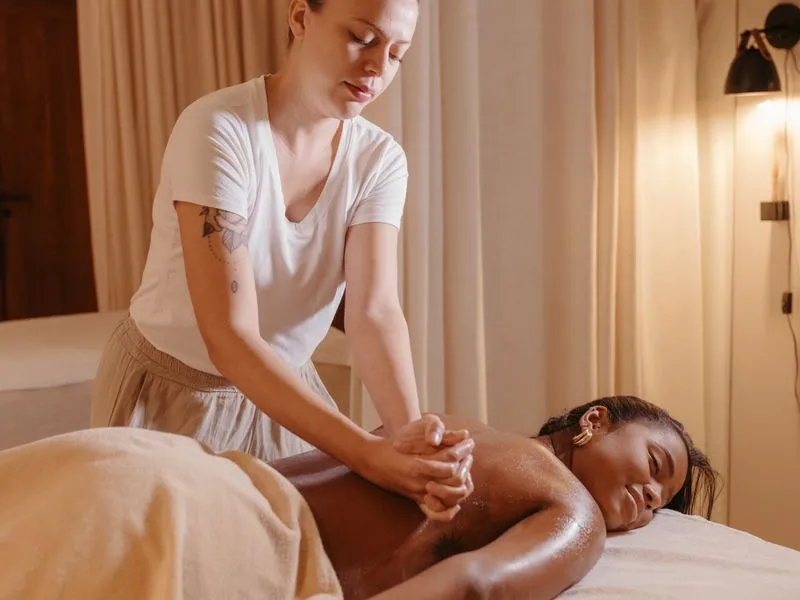
Prenatal massage is a gentle, carefully positioned treatment designed for pregnancy. It uses light-to-medium pressure and a safe side-lying position to ease the aches that come with a changing body — lower back, hips, shoulders and tired, swollen legs — while carefully avoiding anything unsuitable during pregnancy. The single most important step is to check with your doctor or midwife first, particularly in the first trimester.
I’m Mei, an independent female massage therapist in Dubai, and prenatal and postnatal massage is one of my six services. Because pregnancy raises real safety questions, I want to be clear and cautious here rather than glib — so let me explain how it works, what to check before booking, and who it’s genuinely suitable for.
How prenatal massage works (and the side-lying position)
The biggest practical difference from an ordinary massage is positioning. From the second trimester onwards, lying flat on your back for long periods isn’t recommended, and lying on your front obviously isn’t possible. So prenatal massage is done in a supported side-lying position, with pillows and cushions arranged to take the weight off your bump, hips and lower back. It’s comfortable, secure and easy to settle into.
Within that position, I use gentle, flowing strokes and light-to-medium pressure to ease the areas pregnancy tends to load: the lower back and hips as your posture shifts, the shoulders and neck, and the legs. I keep pressure moderate, avoid deep techniques on the abdomen and certain other areas, and check in with you throughout. You stay covered under the sheet with proper draping, and the session is strictly professional from beginning to end.
Because I’m a female therapist and I come to your home, many expectant mums tell me they feel more relaxed and comfortable than they would at a busy spa, especially later in pregnancy.
What a prenatal session feels like
Once you’re settled on your side, propped and supported, the session itself is calm and unhurried. I keep the pressure gentle and check in often, adjusting the cushions if your bump or hips need more support as we go. If you feel uncomfortable in any position, or simply want to shift, we change it — comfort comes before everything, and there’s no ‘right’ way to lie beyond what feels good for you and your baby.
Sessions are usually 60 or 90 minutes. Sixty is plenty if you mainly want your lower back and shoulders eased; ninety gives more time to work slowly through the legs and hips as well. Many mums find late afternoon or early evening works best, when the day’s aches have built up but it’s not yet too late to relax properly before bed.
Is prenatal massage safe? What to check first
For most healthy pregnancies, gentle massage is widely considered fine — but ‘most’ isn’t ‘all’, which is why medical clearance comes first. Please speak to your doctor or midwife before your first session, and mention anything they’ve flagged. Many therapists, myself included, prefer to wait until after the first trimester (around 12 weeks) as a sensible precaution, and to keep the treatment gentle throughout.
There are times when it’s better to wait, or to skip massage altogether — for example with a high-risk pregnancy, pre-eclampsia, a history of blood clots, significant swelling, bleeding, or any complication your doctor has raised. If any of these apply, follow your medical team’s advice over anything you read online. I’d always rather you postponed a session than took a risk. I’ve written more in my blog on whether massage is safe during pregnancy in Dubai.
To be clear on what it isn’t: prenatal massage is comfort and relief, not medical treatment. It can help ease pregnancy aches and help you relax, but it doesn’t treat medical conditions, and it never replaces your antenatal care.
What prenatal massage can help with
Within those sensible limits, it can make a real difference to how you feel. The relief my clients mention most is for lower-back and hip ache, which builds as your bump grows and your posture changes. It can also ease tight shoulders and a stiff neck, help with the heavy, tired feeling in the legs, and simply give you an hour of calm at a time when sleep can be hard to come by.
Sleep is another big one. Later in pregnancy, getting comfortable at night becomes genuinely hard, and easing the tension in your back, hips and shoulders can make it a little easier to settle. It won’t solve every restless night, but a calmer, less achy body helps.
Many mums also value the sheer relaxation of it — a chance to slow down, breathe and feel looked after. That drop in stress is a benefit in itself. What it won’t do is ‘fix’ anything medical or guarantee any particular outcome, and I’ll always be honest about that.
Who it’s for — and when to wait
Prenatal massage suits expectant mothers, generally from the second trimester onwards, who’ve had the go-ahead from their doctor or midwife and want relief from everyday pregnancy aches. It’s also lovely simply as a way to relax and reconnect with your body during a demanding few months.
You should wait, or check carefully first, if you’re in the first trimester, have any complication or high-risk factors, or feel unwell on the day. After the birth, my postnatal work can help with recovery once your doctor is happy for you to have massage — easing the tightness that comes from feeding positions and from carrying a newborn, that hunched, one-sided load the upper back and neck feel so quickly. For some fluid retention afterwards, gentle lymphatic drainage can also help. If in any doubt at all, ask your medical team first, then message me on WhatsApp and I’ll tailor everything around what they’ve said.
How it differs from a regular massage
A standard Swedish massage or deep tissue session isn’t simply a prenatal massage done on a pregnant woman. Prenatal work changes the position (supported side-lying rather than face-down or flat on the back), keeps the pressure gentle, and deliberately avoids techniques and areas that aren’t advised during pregnancy. Booking the dedicated prenatal option means you get a session built around those precautions from the start.
So if you’re pregnant, always choose the prenatal service rather than a regular massage, and tell me how many weeks along you are when you book so I can prepare properly.
Booking a prenatal massage in Dubai
I bring my massage blanket, extra pillows for positioning and fresh linens to your home and make up your own bed, which most mums find far easier than travelling to a spa. A home visit is AED 400 per hour and my studio is AED 300 per hour, with 60 or 90-minute sessions usually the most comfortable. There’s no deposit, payment is cash on the day (bank transfer on request), and I work daily from 10:00 to 23:00 by appointment.
You can read more on the prenatal and postnatal page first if you’d like. If your back and hips are feeling the weeks, and your doctor is happy for you to have a massage, send me a WhatsApp message with how many weeks pregnant you are and anything your doctor has mentioned, and we’ll arrange a gentle, comfortable session.
Frequently asked questions
Is massage safe during pregnancy in Dubai?
For most healthy pregnancies, gentle prenatal massage is widely considered fine, but you should check with your doctor or midwife first, especially in the first trimester. I use a safe side-lying position and gentle pressure. If you have any complications or a high-risk pregnancy, follow your medical team's advice.
When can I start prenatal massage?
Many therapists, myself included, prefer to wait until after the first trimester (around 12 weeks) as a sensible precaution, and always with your doctor or midwife's go-ahead. Every pregnancy is different, so let your medical team guide the timing, and I'll keep the session gentle throughout.
What position do you use for pregnancy massage?
A supported side-lying position, with pillows and cushions arranged to take the weight off your bump, hips and lower back. It's comfortable and secure, and avoids lying flat on your back or front. I bring the extra pillows to your home so everything is set up properly.
Do you offer a female therapist for prenatal massage?
Yes — I'm Mei, a female massage therapist, and I come to your home, which most expectant mums find more relaxing than a busy spa. Home visits are AED 400 per hour. Message me on WhatsApp with how many weeks along you are and I'll tailor the session around you.
How much is a prenatal massage in Dubai?
It's AED 400 per hour for a home visit or AED 300 per hour at my studio, with 60 or 90 minutes usually the most comfortable. No deposit, cash on the day (bank transfer on request). Message me on WhatsApp once your doctor is happy for you to have a massage and I'll book you in.