By Mei Han, massage therapist in Dubai Updated 18 July 2026
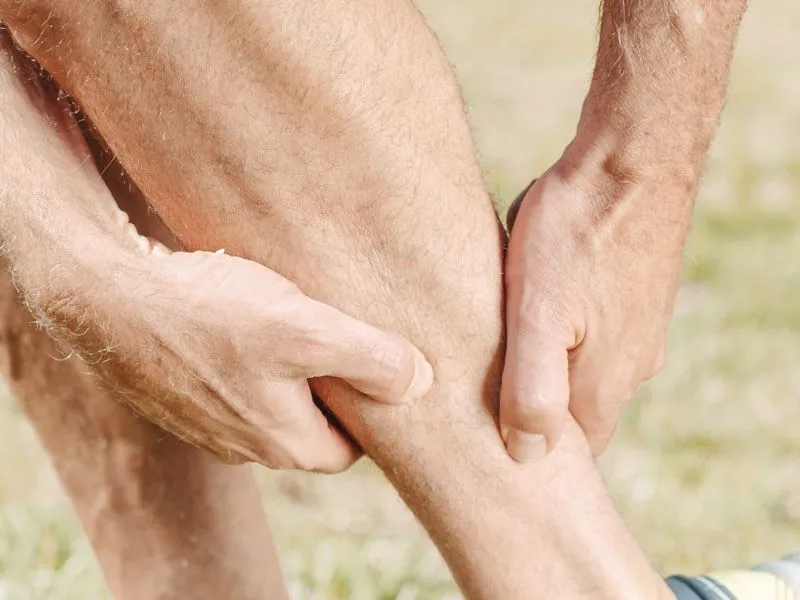
Yes — massage can help ease many kinds of knee pain, though not by treating the joint itself. Most everyday knee ache comes from the muscles that move and support the knee: the quadriceps at the front, the hamstrings behind, the calves below and the IT band down the outer thigh. When those tighten, they pull on the joint. I’m Mei, an independent female massage therapist in Dubai, and here’s my honest take on what helps.
Why the knee hurts when the real problem sits above and below it
The knee is a hinge caught between two long levers — the thigh and the shin — so it rarely suffers alone. Tight quadriceps increase the pressure under your kneecap and change how it tracks when you bend. A tight IT band tugs at the outer knee, especially when you straighten and bend repeatedly. Stiff calves alter how you load the joint with every single step.
In Dubai I see a handful of patterns again and again. Runners pounding hard pavements and treadmills in the heat. Cyclists and padel players who build strong but short, tight thighs. Office workers who sit for ten hours with the knee held at a bend, then wonder why it aches when they stand. And plain wear that arrives with the years. Massage can’t reshape cartilage or undo structural change — I won’t pretend otherwise — but releasing the surrounding muscles often takes a real amount of ache out of the area and helps you move more freely.
The muscles I actually work on for knee pain
When someone books for a sore knee, I’m rarely pressing on the joint itself. I’m working the tissue that feeds into it:
- Quadriceps — the four front-thigh muscles, especially where they converge into the tendon above the kneecap.
- IT band and its drivers — the band itself, plus the glutes and tensor fasciae latae that keep it taut.
- Hamstrings — tightness here changes the angle the knee rests at and adds strain behind the joint.
- Calves — the gastrocnemius and the deeper soleus, often the most overlooked culprits of all.
- The soft tissue around the joint line — worked carefully, never grinding into a hot or inflamed joint.
For stubborn, ropey quads and a gripping IT band, slower and firmer work suits best — this is where a deep tissue session earns its place. For runners, cyclists and padel players who want to keep training through it, I lean on sports and recovery massage, which blends firmer release with movement-friendly techniques you can have before or after a training block.
It’s worth naming the common types, too. “Runner’s knee” — the ache around or under the kneecap — and IT band irritation on the outer knee are both largely muscular, and they tend to respond well to this kind of work. Osteoarthritis and cartilage wear, by contrast, are structural, so here massage is about comfort and easier movement rather than changing the joint itself. I’ll always be straight with you about which camp yours seems to sit in, and about when a physiotherapist would add more than I can.
What a careful knee-focused session involves
I like people to know exactly what they’re booking, so here’s roughly how it goes.
We start with a short conversation: when the pain began, where precisely you feel it, which movements provoke it, and whether there’s any swelling or locking. That tells me what to avoid as much as what to target. You stay comfortably covered throughout with proper draping — my work is strictly professional, by appointment, and I treat both women and men.
Then I warm the thigh and calf before going deeper, working from the hip down toward the knee rather than hammering the sore spot directly. I check in on pressure constantly; useful deep work should feel like a firm, “good” ache you can breathe through, never a bracing sharpness that makes you tense up. If a knee is hot, puffy or clearly irritated, I keep well away from the joint and focus on easing the muscles that are overloading it.
A typical session runs 60 or 90 minutes. Ninety gives me time to treat both legs and the hips properly, which matters because knees often hurt in pairs or compensate for one another. Sessions are AED 400 an hour for a home visit anywhere across Dubai, or AED 300 an hour at my studio, with the same rate across 60, 90 and 120 minutes. There’s no deposit, and you pay in cash on the day (bank transfer on request). You can see the full breakdown on my pricing page.
When to see a doctor or physiotherapist first
This is the honest part, and it matters. Massage supports recovery — it does not replace medical care. Please see your doctor or a physiotherapist before booking a massage if any of these apply:
- Your knee swells quickly, feels hot or looks red.
- It locks, catches or gives way — a sign of possible instability or an internal joint problem.
- You can’t put weight on it, or it buckled after a twist or an impact.
- The pain is severe, or it has lingered beyond two weeks without improving.
- You feel numbness, pins and needles, or pain radiating down from the back or hip, which can mean the nerve or spine is involved rather than the knee itself.
Massage can help ease and manage muscular knee ache, but it can’t diagnose a torn ligament, a meniscus tear or arthritis — those need a proper assessment. If you aren’t sure which side of the line you’re on, get it checked first; I’d far rather you came to me once you’ve had the all-clear.
Looking after your knees between sessions
Bodywork goes further when your daily habits back it up. A few things I usually suggest:
- Keep the thigh and calf mobile. Gentle foam rolling of the quads and calves, plus easy range-of-motion, helps the effect last — but never roll or stretch into a sharp pain.
- Manage the load, don’t just push through it. Build running mileage or padel sessions gradually rather than in big weekend jumps, which is where a lot of Dubai knee trouble starts.
- Get up from the desk. If you sit for long stretches, stand and straighten the knee every half hour so it isn’t held bent all day in the aircon.
- Mind your footwear. Worn-out trainers change how force travels up to the knee, so replace them before they flatten out.
- Stay hydrated and warm up before exercise, particularly if you go from an icy office straight into the heat.
- Warmth before, cool after. Gentle warmth helps a stiff knee loosen before you move, and a cold pack can calm one you’ve overdone. Neither undoes the underlying cause, but both help you stay comfortable between sessions.
How many sessions before my knee eases?
I can’t promise a number, and I’d be wary of anyone who does. For simple muscular tightness, many people feel looser after one session and steadier over two or three spaced a week or so apart. Long-standing tightness from years of running or sitting takes more patience, and the aim is to manage it, to keep you moving and comfortable, rather than to erase it overnight. Regular, sensible massage alongside good self-care is the realistic path.
If your knee has been nagging and you’ve ruled out anything serious, I’m happy to help. Message me on WhatsApp at +971 55 311 5578, tell me a little about what’s going on, and we’ll find a time — often the same day. You can also compare options first on my sports and recovery page or check what a session costs on the pricing page before you decide.
Frequently asked questions
Can massage really help my knee pain in Dubai?
Massage can help ease and manage muscular knee pain by releasing the quads, hamstrings, calves and IT band that support the joint. It won't repair cartilage or a torn ligament, so severe or locking knees need a doctor first. A home visit is AED 400/hr, studio AED 300/hr, no deposit.
Should I get a deep tissue or sports massage for knee pain?
For stiff, ropey quads and a tight IT band, deep tissue suits best. For runners, cyclists and padel players who want to keep training, sports and recovery massage is the better fit. If you're unsure, message me on WhatsApp and describe your knee, and I'll suggest which to book.
When should I see a doctor instead of booking a massage?
See a doctor or physiotherapist if your knee swells quickly, locks or gives way, can't bear weight, feels hot and red, or if pain is severe, radiating or has lasted beyond two weeks. Massage supports recovery but doesn't replace medical care, so get serious knee symptoms assessed first.
Do you come to my home for a knee massage in Dubai?
Yes. I'm a home-visit therapist and come to homes, hotels and serviced apartments across Dubai, from the Marina to Mirdif. A home visit is AED 400/hr, or AED 300/hr at my studio, with no deposit and cash on the day. Message me on WhatsApp to arrange a time, often same-day.
How long is a session and what does it cost?
Sessions run 60, 90 or 120 minutes at the same hourly rate: AED 400/hr for a home visit anywhere in Dubai, AED 300/hr at my studio. For knees I usually suggest 90 minutes so I can treat both legs and the hips. No deposit, pay cash on the day (bank transfer on request).