By Mei Han, massage therapist in Dubai Updated 11 October 2026
Short answer
For tight, knotted or sore muscles, a massage usually helps more; for flexibility you keep, stretching — on your own or at an assisted-stretch studio — does the long-term work. Many people do best with both: massage to release, stretching to keep the range. I offer massage, including sports and recovery work, not assisted-stretch sessions.
In Dubai and want hands-on help? Message Mei on WhatsApp · female therapist, AED 400/hr at home, no deposit.
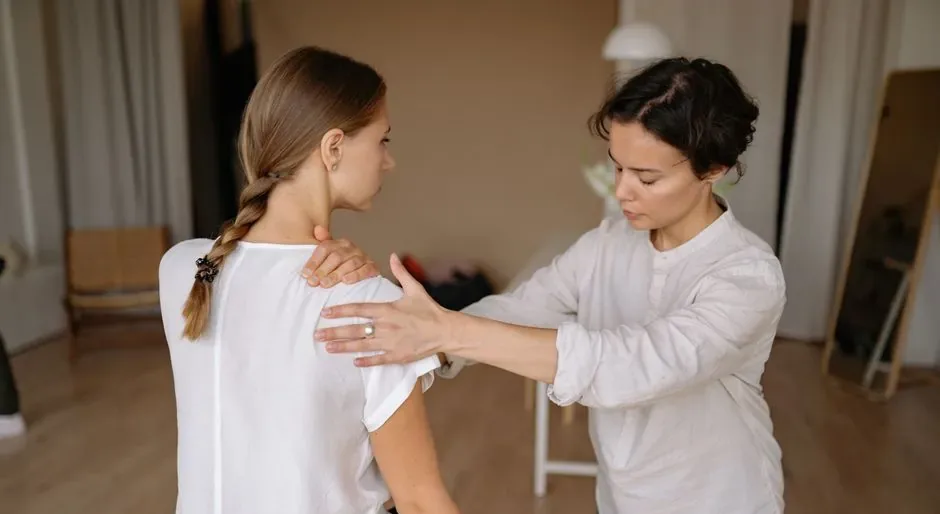
I’m Mei, an independent female massage therapist in Dubai. I don’t sell stretching, so I’ve no reason to oversell either side. This page sorts out which kind of tight you have, what each option actually does, and how to use both.
Is massage or stretching better for tight muscles?
Match the tool to the kind of tight. For muscles that feel knotted, sore or guarded, massage usually gives more relief, because it works on the exact spot while you rest. For range of motion you keep, stretching wins, because flexibility only lasts when you repeat it several times a week. Many tight muscles need both.
| What “tight” feels like | Better first move | Why |
|---|---|---|
| A tender spot you can point to, such as under a shoulder blade | Massage | A stretch pulls on the whole muscle; pressure works on the spot |
| Heavy, sore legs the day after training | A lighter massage or gentle movement | Sore muscles don’t like being forced to length |
| You’ve never been able to touch your toes | Stretching, most days | A long-term range issue that one massage won’t change |
| Stiff hips after a week at a desk | Both: massage to release, stretching to keep it | Sitting shortens the front of the hip, and it comes back if you don’t move |
| Shoulders up by your ears after a stressful week | Massage | Part of that tightness is your nervous system, not the muscle |
| Sharp pain, a pop, numbness or tingling | Neither, for now | See a doctor or physiotherapist first |
The common mistake is treating every kind of tightness as a flexibility problem. A knot doesn’t need lengthening; it needs pressure and time. A short hamstring doesn’t need pressure; it needs regular stretching. If your hips are the issue, my guide to massage for tight hips goes through the desk-and-run pattern in detail.
What is a stretch massage?
“Stretch massage” isn’t one fixed treatment. It usually means Thai massage, done clothed on a mat while the practitioner moves you through yoga-like stretches, or a session at an assisted-stretch studio. Some therapists also add a few passive stretches to an ordinary oil massage. They feel quite different, so it’s worth knowing which one you’re searching for.
The three things people usually mean:
- Thai massage. A traditional style done fully clothed on a floor mat, without oil. The practitioner uses palms, thumbs, knees and body weight, and folds and pulls you through long stretches. It’s active and sometimes intense.
- Assisted stretching. A session at a stretch studio, clothed, where a coach moves your limbs into stretches and holds them. There’s no massage as such; the focus is range of motion.
- Massage with a few stretches. An oil massage where the therapist takes a limb through its range at points during the session, usually in sports work.
I don’t offer Thai massage or standalone assisted-stretch sessions. What I offer is the third kind: my sports and recovery massage is organised around how freely your muscles move, and I’ll take a leg or arm through its range as part of the massage. It’s still a massage, on your own bed, with oil and proper draping. If Thai is what you had in mind, my guide to Thai massage in Dubai explains what it involves and who should skip it.
Assisted stretching in Dubai: what is it and who does it suit?
Assisted stretching is a one-to-one session where a stretch coach moves you into stretches you’d struggle to reach alone, often using contract-relax: you push gently against their hand, then relax into a little more range. It suits people who want more flexibility and won’t stretch consistently by themselves. It’s a training habit, not a treat.
Sessions take place clothed, usually on a padded bench or mat at a studio; some offer home visits. Studios set their own prices and session lengths, so check current rates directly.
Who it tends to suit:
- Desk workers with chronically short hips and hamstrings who know they should stretch and don’t.
- Golfers, padel players and runners whose sport needs range that daily life doesn’t give them.
- Anyone with a clear range goal, such as squatting deeper or touching their toes, who wants someone else to hold them to it.
Who might be better served by massage:
- People whose “tight” is really sore, knotted or stressed. Pulling a guarded muscle to its end range rarely makes it let go.
- People who brace when pushed. If being taken to your limit makes you clench, you’ll get more from slow pressure.
- People whose joints already move very freely. More range isn’t the goal; my guide to massage with hypermobility covers that case.
Is it worth it? Only with repetition. Harvard Health says flexibility takes weeks to months and suggests stretching daily, or at least three or four times a week. A single session will feel lovely and change little.
What does massage do that stretching can’t?
Massage works on a muscle while it’s relaxed, with pressure on the exact area, so it can ease knots, soreness and guarding that a stretch only pulls on. It also settles your nervous system, which is part of why muscles feel tight. What it can’t do is give you lasting range; that needs regular stretching.
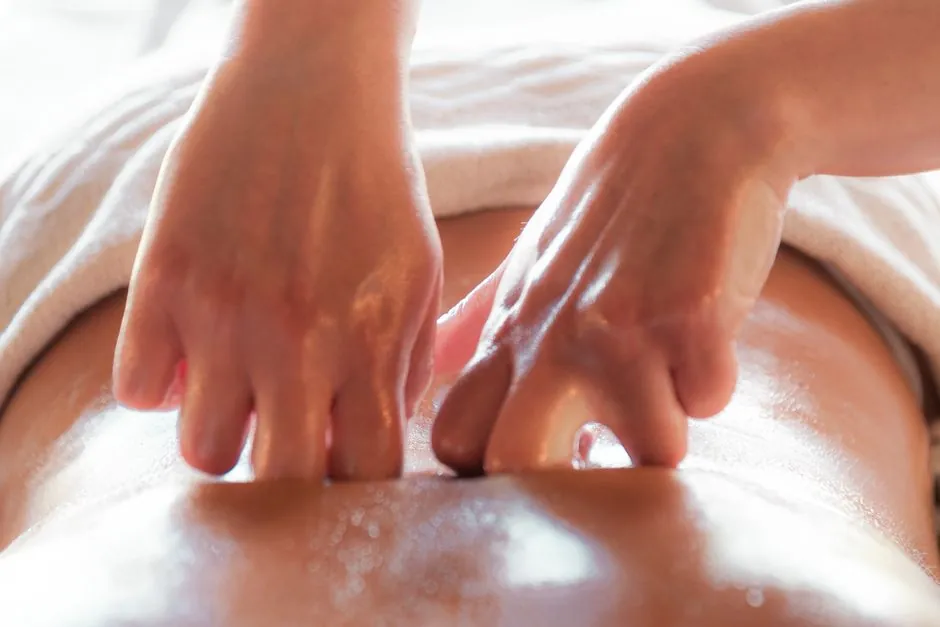
Specifically, massage can:
- Reach places you can’t stretch well: between the shoulder blades, the side of the neck, deep in the glutes.
- Work when you’re too sore to stretch. The day after a hard session, lighter massage eases the heavy feeling without forcing anything.
- Lower the guarding. A stressed body holds itself stiff; a slow hour lets the shoulders drop.
- Show you where the problem is. Where I find tension often tells you what to stretch afterwards.
The honest limit: the US National Center for Complementary and Integrative Health notes that massage may help neck and shoulder pain, but the benefit may only last a short time. That’s why I’d never sell massage as a replacement for moving. For one area that’s been stuck for weeks, deep tissue massage is slower and firmer; expect to feel a little tender for a day or two, as explained in why you might be sore after a massage.
If your muscles feel tight and you’d like hands-on help, message me on WhatsApp with where it’s tight and when you train.
Should you stretch or get a massage first?
On the same day, massage first and gentle stretching later or the next day, not forceful stretching straight after firm work. Before a match or race, skip deep massage for 48 hours and warm up with movement instead. And never stretch cold: five to ten minutes of light movement first.
How I’d order it:
- Before training or a match: a dynamic warm-up (leg swings, arm circles, easy jogging), not long static holds. Harvard Health warns that stretching muscles before they’re warm can hurt them.
- Straight after training: a short cool-down and gentle stretches, held around 30 seconds without bouncing.
- Massage: that evening or a day later, once the worst soreness has passed.
- After a massage: an easy walk and light stretching if it feels good. Don’t use the loose feeling to test your furthest range.
Before a massage you don’t need to stretch at all. A warm shower does more.
How do you combine massage and stretching in a week?
Stretch little and often, five to ten minutes on most days, and use massage less often to clear what stretching doesn’t reach. If you train hard three or more times a week, a massage every two to four weeks is plenty; for lighter activity, monthly. Book it on a rest day, never the night before something you care about.
A simple pattern that works for most active people:
| When | What |
|---|---|
| Most days, 5–10 minutes | Stretch the areas you sit or train on: hips, hamstrings, calves, chest |
| After each training session | Cool-down and gentle stretches |
| A rest or easy day, every 2–4 weeks | Recovery massage at home that evening |
| The 48 hours before a race or match | No deep massage; light movement only |
| When something is sharp or not improving | Stop both and see a physiotherapist |
The pairing works because each covers the other’s gap: massage releases what’s tight now, stretching keeps the range you got back. Skip either and the tightness tends to return.
What can you book with me?
If your muscles feel tight from training, book sports and recovery; if it’s one knot or an area that’s been stuck for weeks, book deep tissue. Sessions run 60, 90 or 120 minutes at AED 400 per hour at your home or hotel, or AED 300 per hour at my studio, with no deposit.
Sixty minutes covers one or two areas properly; 90 covers the whole pattern of a runner or padel player. I come with my massage blanket, fresh linens, towels, a headrest, a bolster and oils, and make up your own bed, so you need only a quiet room. Sessions are strictly professional, with proper draping, and I work with both women and men, daily 10:00–23:00 by appointment. The step-by-step of a visit is on my what to expect page.
What I don’t do: Thai massage, floor-mat sessions or standalone assisted stretching. If that’s what you want, a Thai practitioner or a stretch studio is the right call, and you can still book a massage between those sessions.
Tell me where you’re tight on WhatsApp: what you train, where it pulls and when you’re free. I’ll suggest the right session and how long it should be.
Frequently asked questions
Is massage or stretching better for tight muscles?
It depends what kind of tight. If a muscle is knotted, sore or guarding, as with a spot under your shoulder blade or heavy legs after training, massage usually helps more because pressure works on the exact area while you relax. If you've always been short in the hamstrings or hips, stretching wins, because range only lasts when you repeat it several times a week.
What is a stretch massage?
It isn't one fixed treatment. Most people mean Thai massage, done clothed on a mat with the practitioner moving you through yoga-like stretches, or a session at a stretch studio, where a coach moves your limbs through assisted stretches. Some massage therapists also add a few passive stretches to an oil massage. I offer massage, not Thai or stretch sessions.
Should I stretch before or after a massage?
You don't need to stretch before a massage; a warm shower is a better way to arrive. Afterwards, keep it gentle: an easy walk and light stretching that evening or the next day are fine, but don't use that loose feeling to force your furthest range. After firm deep tissue work, give the area a day before stretching it hard.
Is assisted stretching worth it?
It's worth it if you want more range, you won't stretch consistently on your own, and you can go regularly. Flexibility builds over weeks of repetition, so a single session feels good but changes little. If your tightness is really soreness, knots or stress, a massage is usually the better spend. If pain is sharp or comes with numbness, see a physiotherapist first.
Can a massage improve flexibility?
For a day or two, yes: muscles relax, you stop guarding and you move more easily. Lasting flexibility comes from stretching regularly over weeks, which Harvard Health suggests doing daily or at least three or four times a week. The most useful way to see a massage is as a head start that makes those stretches more comfortable, not a replacement for them.