By Mei Han, massage therapist in Dubai Updated 17 October 2026
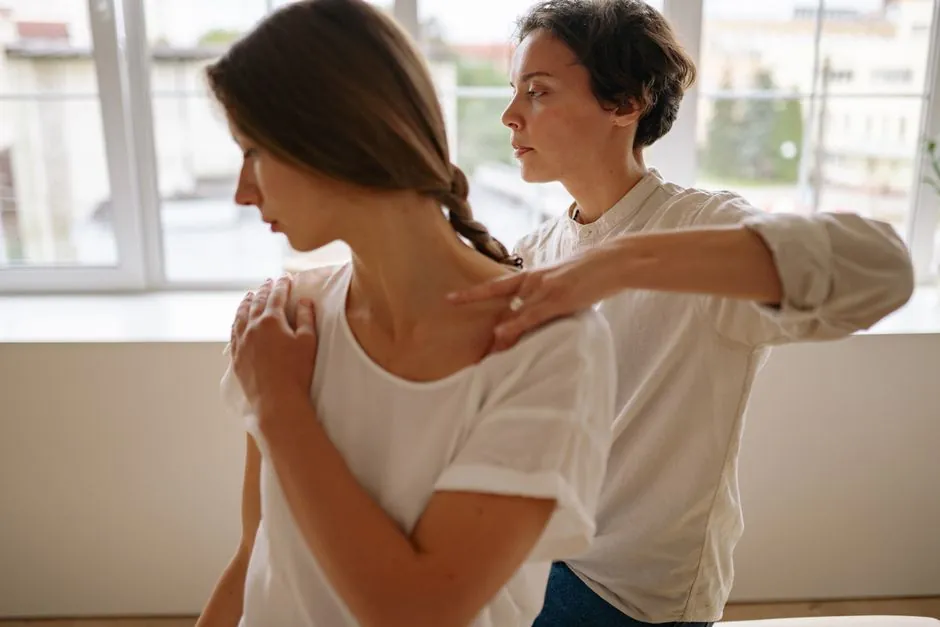
If you have hypermobility, choose a massage for comfort rather than a session aimed at increasing your range of movement. Explain which joints feel unstable, which positions are comfortable and any physiotherapy restrictions before booking. Avoid forced stretching or testing how far a joint can go. New injury, repeated slipping or unexplained pain needs clinical advice before hands-on work.
I’m Mei, an independent female massage therapist in Dubai. A person can feel tight and still have joints that move very freely. That is why “stretch me more” is not a useful starting instruction here; I want to understand what feels tiring and what support makes resting comfortable.
What should massage aim to do when you are already flexible?
The useful aim is a comfortable break and, where appropriate, help easing familiar muscular tension. It is not greater flexibility, joint repositioning or a promise to prevent dislocations. Describe an ordinary outcome, such as resting without holding your shoulders up, rather than a target angle or a deeper stretch.
The NHS guidance on joint hypermobility syndrome puts muscle strength and fitness at the centre of management and advises against overextending joints simply because they can move further. Massage does not replace that work. If you have a physiotherapy programme, its goals remain separate from the relaxation appointment.
A diagnosis also matters more than an internet label. Being flexible does not establish a hypermobility disorder, and I do not assess or diagnose one. If recurring pain, sprains or joints slipping out of place are the reason you are seeking massage, ask your doctor or physiotherapist to assess them first.
My massage versus stretching guide covers the general choice between hands-on comfort and practising movement. This page deals with the different question of keeping an already mobile joint supported during an appointment. More movement is not the outcome we are trying to create.
Consider the difference between “my shoulders feel tired after a desk day” and “my shoulder keeps slipping”. The first may be a comfort enquiry once relevant restrictions are understood; the second needs clinical assessment. A massage menu cannot make those two requests equivalent.
How do you choose positions without testing your joints?
Choose familiar positions in which you can rest without actively holding yourself together. Tell me what usually supports your arms, legs or neck and which position changes are awkward. The plan should come from your experience and clinical advice, not from a flexibility demonstration at the start of the visit.
For example, saying “please keep my elbow comfortably bent and supported” gives a clearer instruction than “my arms are very flexible”. Describe the comfortable position rather than showing the furthest point your joint can reach. If you have been told to avoid a movement, that remains an exclusion even if it is painless today.
| Situation | Useful booking instruction |
|---|---|
| A joint feels unsettled when a limb hangs unsupported | Explain the resting support you normally use |
| Turning on the bed causes difficulty | Agree fewer changes of position, or check suitability first |
| You tend to lock your knees or elbows at rest | Ask to stay in a comfortable, non-forced position |
| A clinician has restricted a particular movement | Share the restriction before choosing the session |
| A joint has recently slipped or been injured | Seek clinical advice before arranging massage |
For home visits I use your own bed, a massage blanket and fresh linens. I bring a headrest and bolster; if your usual positioning needs more support, explain that before booking rather than assuming a particular item will be available. The appointment setup guide describes what the visit involves.
Support is a practical requirement, not a claim that I offer specialist hypermobility rehabilitation. If you need assistance or positioning beyond an ordinary massage setup, we should establish that early. The right decision may be a clinician-led setting with the support you require.
What pressure and feedback should you agree beforehand?
Agree a comfortable starting pressure, areas to avoid and a clear way to stop. There is no reason to choose deep tissue simply because your muscles feel tight. A familiar ache does not tell us how much pressure is appropriate, especially when bruising, tenderness or another diagnosed condition also needs consideration.
My Swedish and relaxation massage is a sensible service to enquire about when the goal is rest. Tell me that you do not want assisted stretching and that any position change should be explained first. A service label is only the beginning; the agreed actions matter more.
Use specific feedback during the session. “Please support that arm”, “keep the knee bent”, “lighter here” and “stop while I change position” are all more useful than waiting until something becomes too much. You do not have to decide whether discomfort comes from a muscle or joint before speaking up.
A quiet session is still compatible with brief checks. We can agree a simple stop signal if you prefer fewer words, but silence should never be treated as permission to increase pressure or range. You remain in control of which areas are touched and can change your mind.
Tell me your position and pressure preferences on WhatsApp. Include the parts of your physiotherapy advice that affect the appointment, rather than a request for an all-over “release”. That gives us a usable starting plan.
How should massage fit around physiotherapy and activity?
Keep the existing rehabilitation plan intact and make the massage an optional comfort activity. If your physiotherapist wants you to practise strength, control or pacing, feeling relaxed after massage is not a reason to replace those exercises with more stretching. Nor is it clearance to increase your training load.
Choose a day when you can notice how the appointment feels without combining it with several unfamiliar activities. This is practical scheduling advice, not a prescribed recovery interval. If your clinician has given specific timing instructions, follow those instead of arranging massage around a generic online timetable.
Before the session, note one ordinary task that reflects your comfort: sitting through a meal, resting your arms or settling for sleep. Afterwards, compare that same task without deliberately testing the joint. The question is whether the appointment was comfortable and useful, not whether you can bend further.
If a session leaves you feeling less stable, unusually sore or more limited, stop repeating the same approach and seek advice. New swelling, persistent or severe pain, numbness, weakness or radiating pain should be discussed with your doctor or a physiotherapist. A suspected dislocation needs appropriate medical care, not an attempt to put it back during massage.
Hypermobility can be part of different conditions, including conditions with additional tissue or medical considerations. Share relevant clinician restrictions; do not assume that a plan suitable for another flexible person is suitable for you. I do not claim specialist treatment for Ehlers-Danlos syndromes or diagnose their different forms.
An appointment can still have a positive, modest purpose. You may simply want unhurried attention to approved muscular areas while staying well supported. That is a clearer reason to book than trying to change the structure of your joints.
If turning or lying down causes spinning, joint support alone does not answer the booking question. My massage with vertigo guide covers medical assessment, movement triggers and planning transitions before a relaxation session.
How do you arrange a first appointment in Dubai?
Start with a small scope and a duration that suits your comfortable resting time. Sixty minutes may give enough room for a focused relaxation appointment; ninety minutes only makes sense if broader work and the positioning remain comfortable. Two hours is an available length, not a better outcome or a target to build towards.
Home and hotel visits cost AED 400 per hour, while the studio costs AED 300 per hour. Sessions last 60, 90 or 120 minutes at the same hourly rate, with no deposit. Payment is cash, with bank transfer on request; the pricing page sets out the totals.
I welcome both women and men for strictly professional massage, with proper draping, daily 10:00–23:00 by appointment. The studio uses a large bed made for clients. Choose home or studio by the practical support and access you need, then confirm the position before confirming the time.
Message me on WhatsApp with your comfort goal, joint restrictions, preferred position and Dubai area. A useful appointment should let you rest within a comfortable range, without making flexibility the measure of success.
Frequently asked questions
Is massage a good idea if I have hypermobility in Dubai?
A comfort-focused massage may be worth discussing when your symptoms and relevant restrictions are understood. It should not aim to increase an already large movement range or replace physiotherapy. Message me on WhatsApp with your usual comfortable position, any joints that feel unstable and the advice that affects hands-on work.
Should a massage therapist stretch my hypermobile joints?
Do not use a massage appointment to test or push your furthest range. Tell the therapist about hypermobility and any physiotherapy restrictions, and agree supported positions without forced stretching. If you want to discuss a relaxation session with me, send those preferences on WhatsApp before choosing the appointment time.
Does Mei provide specialist Ehlers-Danlos syndrome treatment?
I provide professional massage for comfort, not specialist treatment or rehabilitation for Ehlers-Danlos syndromes. Your clinician should advise on condition-specific risks and restrictions. If they consider an ordinary relaxation massage appropriate, message me on WhatsApp with the practical guidance so I can confirm whether the required setup and scope are suitable.
What are the prices for a relaxation massage in Dubai?
Home and hotel appointments cost AED 400 per hour; studio appointments cost AED 300 per hour. The available durations are 60, 90 and 120 minutes at the same hourly rate, with no deposit. Payment is cash, with bank transfer on request. Confirm positioning, scope and timing directly on WhatsApp.