Service
Deep tissue massage
Release chronic tension and knots.
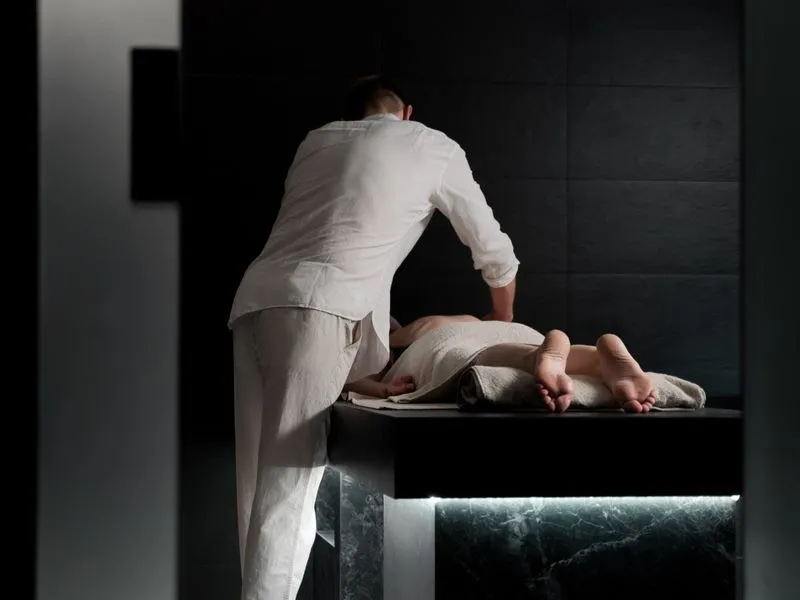
Firm, focused pressure that works through deeper layers of muscle to relieve long-held tightness — ideal for stubborn neck, shoulder and lower-back tension from desk work or training.
Good for
- Office neck & shoulders
- Lower-back tightness
- Chronic knots
Every session is strictly professional, with proper draping throughout. I welcome both women and men by appointment.
Deep tissue massage is slow, firm, focused work through the deeper layers of muscle, aimed at the specific knots and bands a general rub never reaches. It suits a particular ache — a desk-bound neck, a locked shoulder, a tight lower back — more than a wish to unwind. I’m Mei, an independent female therapist in Dubai: home or hotel visits are AED 400 per hour, my studio AED 300, for 60, 90 or 120 minutes.
What does deep tissue massage actually do?
It finds where muscle has bunched up, then releases it with slow, sustained pressure — depth comes from patience, not force. Muscle rarely tightens evenly. It builds tension into bands and specific sore points, and around them the connective tissue that wraps every muscle stops gliding the way it should. That’s why a tight shoulder feels like a rope or a marble rather than a uniformly stiff area — and why being rubbed briskly all over does almost nothing to it.
So I work in layers rather than pressing hard from the start. The first passes warm the surface and let me feel where the tissue genuinely resists, which is often not where you expected. Then I sink in slowly — forearm, thumb or knuckle — stop at the depth where the muscle first pushes back, and stay there while it releases under sustained contact, usually about as long as a few slow breaths. Push in fast and the muscle guards to protect itself; go slowly and it gives.
The other half of the job is knowing where to go. In a desk-bound body the loudest complaint is the top of the shoulders, but what’s holding it there is usually the small muscle running up the side of the neck to the shoulder blade, the muscles between the blades that spend all day held long and switched off, and a chest quietly shortened from hours of reaching forward to a keyboard. Treat only the sore spot and you’ll be booking again next week.
Who is deep tissue massage for in Dubai?
Anyone whose tension has a specific address rather than a general feeling of being wound up. Dubai’s pattern is oddly consistent — long static days, then hard bursts, and the same few places pay for it:
- Tower desk workers in DIFC, Business Bay and JLT — ten-hour days, plus an hour each way on Sheikh Zayed Road, that land squarely in the neck, upper back and lower back.
- Padel and gym regulars — five sedentary days followed by one explosive weekend is a reliable recipe for knotted, overworked muscle.
- Long-haul travellers — a back that’s set solid and hips that have forgotten how to open after eight hours in a seat.
- Anyone with a knot they can find with their own fingers — the recurring one that stretching never quite reaches.
Deep tissue or Swedish — how do they differ?
Deep tissue is for a specific problem; Swedish is for a wound-up system. If you can point to the spot, book deep tissue; if you mostly want to switch off, book Swedish & relaxation and ask for firmer pressure where you’d like it.
| Deep tissue | Swedish & relaxation | |
|---|---|---|
| Pressure | Firm, slow, sustained — into the deeper layers | Light to medium, flowing, rhythmic |
| Goal | Release specific knots and tight bands | Settle the nervous system, ease everyday tension |
| Coverage in an hour | A few areas, in depth | The whole body, evenly |
| How you may feel after | Looser, sometimes a little tender | Relaxed or sleepy; responses vary |
| Best time to book | Any day you can rest afterwards | An evening with nothing on after |
If you prefer the lighter approach, read about my Swedish & relaxation massage.
What does a home deep tissue session look like?
We start with two minutes of conversation, not paperwork: where it hurts, what you do all day, what you’ve already tried, and anything a doctor has told you about it. Then I set up wherever you point me — your bedroom, a guest room, whichever is quietest — with my massage blanket over your own bed, fresh linens and oils. Proper draping throughout; only the area I’m working is uncovered, and the full routine from arrival to pack-down is on what to expect.
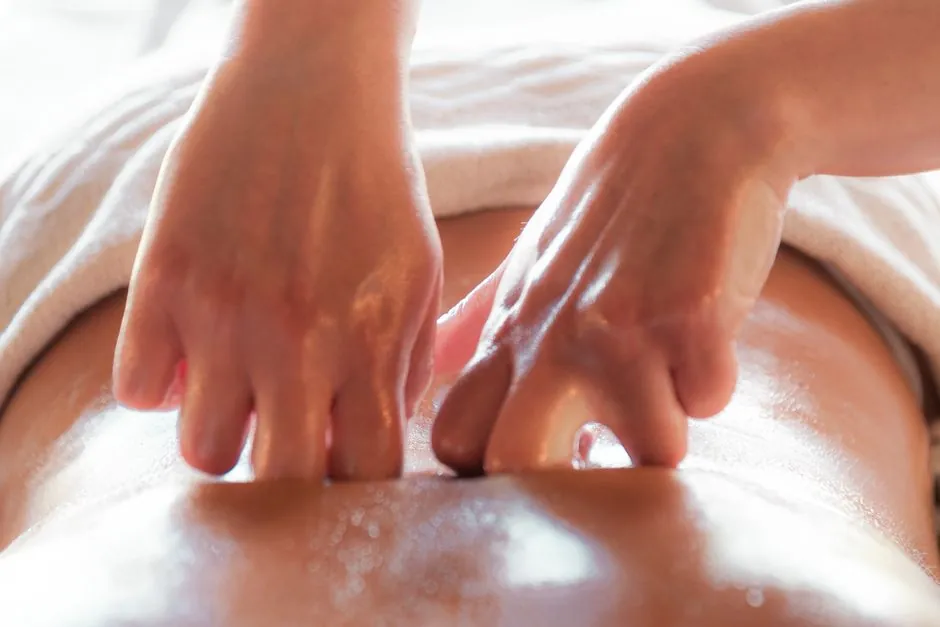
Deep tissue is slower than people expect. An hour covers less ground than a relaxation session because we spend real time in a few places, sometimes twenty minutes on one shoulder. I’ll ask you to move with me: turning your head so I can reach the side of your neck properly, letting an arm hang off the edge of the bed so the shoulder blade opens, occasionally pressing gently against my hand so the pressure lands deeper. Pressure is a conversation, not a setting — more, less and stay there are the three most useful things you can say to me, and I’d much rather hear them than have you be polite. Not sure where intense ends and painful begins? Intense is a strong pressure you can breathe through; painful makes you hold your breath or tense up, and that is when to tell me so I ease off.
Then comes the part that makes doing this at home worth it. Have water, take a warm shower if you like, and put nothing demanding in the evening. You might feel tender tomorrow; responses vary, so tell me if anything feels uncomfortable. If soreness is severe or persists, speak with a doctor or physiotherapist. What genuinely wastes the session is getting up and straight into a car across town, which is exactly what a studio appointment forces you to do. If that’s the evening you want, book a home visit on WhatsApp.
When should you not book deep tissue?
Not in the first few days after an injury, not while you have a fever or feel unwell, and not without a word from your doctor if you take blood-thinning medication or have had a clot. Firm pressure into freshly injured or inflamed tissue makes it worse. And in a city of long flights: a calf that is swollen, warm, red or painful on one side only can be a sign of a clot — see a doctor the same day, and don’t let anyone massage it.
Pain that is severe, persistent, radiating down an arm or leg, or arriving with numbness belongs with a doctor or physiotherapist first: deep tissue can help ease the muscular tension around a problem, but it isn’t a diagnosis. For a sober summary of what the evidence does and doesn’t support, read the NCCIH’s overview of massage therapy.
My honest take
The spot you’d point to is the loudest one, not usually the guilty one.
Necks ache because shoulders and chests have been doing something wrong for eleven hours. Lower backs seize up because hips have been folded into a chair since morning and have stopped contributing. So when someone books an hour and asks me to spend all of it on the one square inch that’s screaming, I’ll give it fifteen good minutes and spend the rest upstream — and get a better result. A therapist who only ever works where you point is selling you relief on repeat.
The other thing I’ll say plainly: one session will not undo years of posture. It can help ease the tension you feel that week, but the load that built it is back at your desk on Monday morning. Deep tissue is maintenance for a body doing something hard, not a long-term answer on its own. My guide to desk-work neck and shoulder pain explains the daily changes that help the treatment last.
If that sounds like your neck, shoulder or lower back, message me on WhatsApp and describe the ache rather than the technique — where it is, how long it’s been there, what makes it worse — and I’ll tell you honestly whether deep tissue is the right call. I come to homes and hotels across more than 30 areas of Dubai; Business Bay is a typical evening, blanket, linens and oils included.
Frequently asked questions
Does deep tissue massage hurt?
It shouldn't — it should feel intense but satisfying, never sharp. Good deep tissue sits right at the edge where you can still breathe normally. If you're gripping the sheets or holding your breath, the pressure has gone too far and the muscle simply braces against it, which undoes the work. I check in as I go and adjust the moment you say so.
How sore will I be after a deep tissue massage?
Usually a little tender for a day, occasionally two — a dull, worked-out ache like the day after the gym, not sharp pain. It's most noticeable after a first session, or when we've spent real time on a long-standing knot. Drink water, keep moving gently and skip heavy training that evening. If soreness is sharp or drags on, see a doctor.
How often should I get a deep tissue massage?
For one stubborn problem, every one to two weeks until it settles, then monthly to hold it there. If you sit at a desk all week, monthly is a sensible baseline — your job rebuilds the tension continuously, so it keeps needing clearing. Steady and regular beats an intense burst followed by nothing for a year.
Deep tissue or Swedish — which should I book?
Book deep tissue if you have a specific ache you want worked on: the knot under your shoulder blade, a neck that won't turn, a lower back tight from sitting. Book Swedish if you're mostly stressed and want to switch off. Genuinely torn? Message me and describe how you feel rather than naming a technique, and I'll tell you straight.
Can I get a deep tissue massage at home in Dubai?
Yes — home and hotel visits are how I mainly work. I bring my massage blanket, fresh linens and oils to your home, hotel or apartment and set up on your own bed, so the pressure and precision are exactly what they'd be in a studio. It's AED 400 per hour at home, AED 300 at my studio, agreed up front on WhatsApp with no deposit.
Key facts at a glance
- Therapist
- Mei Han — independent female massage therapist, Dubai
- Price
- AED 400 per hour at your home or hotel · AED 300 per hour at the studio
- Duration
- 60, 90 or 120 minutes, same hourly rate
- Deposit
- None — fixed price agreed on WhatsApp, no travel fee
- Payment
- Cash after the session (bank transfer on request)
- Hours
- Daily 10:00–23:00, by appointment · same-day often possible
- Booking
- WhatsApp only, +971 55 311 5578
- Set-up
- A massage blanket laid over your own bed — no folding table. Studio: a wide bed made for clients
- Coverage
- More than 30 Dubai areas, plus hotels and serviced apartments
- Boundaries
- Strictly professional, proper draping throughout · women and men welcome
Facts and prices last reviewed 6 October 2026.
Self-care between sessions
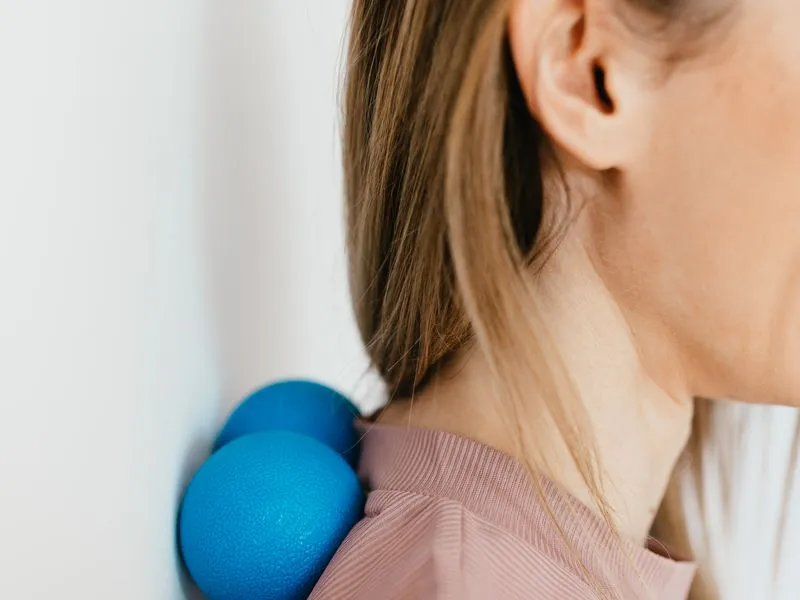
Simple things you can do yourself. When the ache keeps returning, a focused treatment reaches what stretching can't.
Deep tissue massage by area in Dubai
See deep tissue at home in your part of Dubai — local detail, the towers I visit and how to book: