By Mei Han, massage therapist in Dubai Updated 3 October 2026
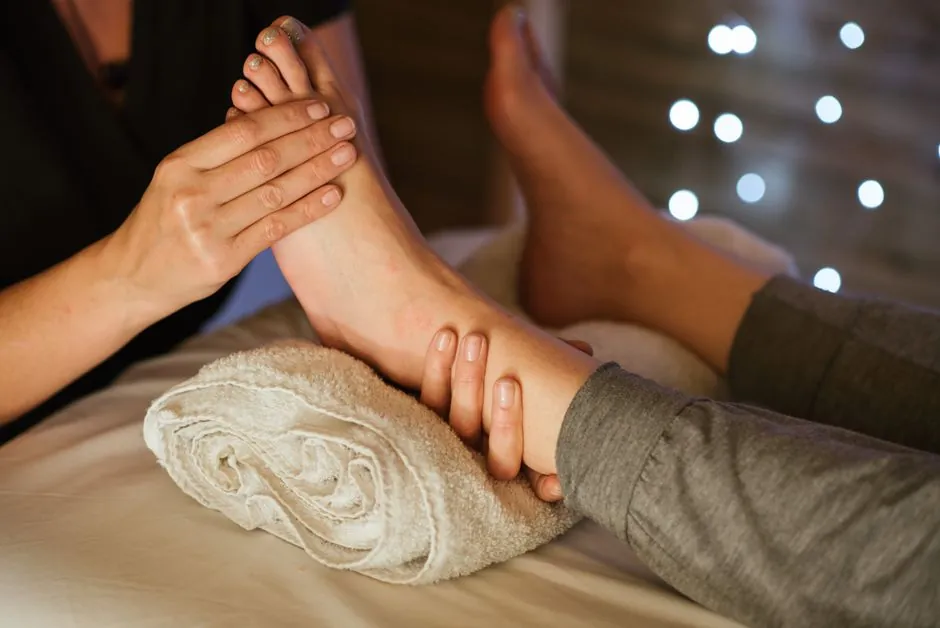
I don’t offer Thai massage. Thai massage is a clothed, oil-free treatment on a floor mat, built on rhythmic pressure and assisted stretching: the practitioner moves your body as much as they press it. If being stretched while dressed is what you want, find a Thai-trained practitioner. If you wanted it to loosen stiff hips, hamstrings or back, my sports & recovery massage is the nearest thing I do.
I’m Mei, an independent female massage therapist in Dubai, and I’m not connected to any Thai spa, including ones whose names sound like mine. This page explains the real thing, so you can recognise a good practitioner, and tells you honestly what I’d book instead.
What actually happens in a Thai massage?
You stay dressed in loose clothes, lie on a padded mat on the floor, and are pressed, stretched and rocked through a sequence that usually works up from the feet. The traditional form uses no oil. It feels less like lying still under a towel and more like being taken through a yoga class you don’t have to do yourself.
- Pressure comes from palms and thumbs, worked along lines the tradition calls sen, and from forearms, elbows, knees and sometimes feet.
- Assisted stretches take your hips, legs, spine and shoulders into yoga-like positions you couldn’t hold on your own, including twists and hip openers.
- Rhythm matters as much as force: the pressure rocks and rolls rather than digging in and staying.
A full sequence from the feet to the head takes time, so a short booking usually means fewer stretches. If mobility is the reason you’re going, book the longer option.
It’s a living tradition with deep roots, not a spa invention. In 2019 UNESCO added “Nuad Thai, traditional Thai massage” to its list of the world’s intangible cultural heritage, as the Wikipedia entry on Thai massage notes.
One menu trap is worth knowing. A “Thai oil massage” is usually much closer to an ordinary oil massage with some Thai-style pressure. If the stretching is what you’re after, ask whether the session is on a mat and fully clothed.
Who is Thai massage good for, and who should skip it?
It suits people who are reasonably mobile, enjoy firm rhythmic pressure and want stretching they can’t get into alone. It’s a poor match for anyone who struggles to get down to the floor and back up, or whose joints shouldn’t be pushed to the end of their range.
A good fit if:
- you feel stiff rather than sore — hips, hamstrings and a back that have stopped moving freely;
- you’d rather stay dressed;
- you like being moved, and lying still for an hour bores you.
Check with your doctor first, or choose something gentler, if:
- you’re pregnant — many classic Thai stretches aren’t suitable, and a side-lying pregnancy massage is the safer choice;
- you have osteoporosis, a joint replacement or recent surgery;
- your joints are very loose (hypermobile), because being stretched further is the opposite of what they need;
- you take blood thinners or bruise easily, as thumb and elbow pressure can be strong;
- you have a recent sprain or strain, or pain travelling down a leg.
The mistake I’d warn you off is booking Thai for pain. Stretching an irritated muscle hard tends to irritate it more. Thai is at its best for stiffness, not injury.
How can you tell a genuinely Thai-trained practitioner?
Look at the setting, the questions and the pace. A trained practitioner works on a mat, keeps you clothed, asks about your body before starting, and takes each stretch slowly, stopping at a firm stretch rather than pushing into pain. Thai massage appears on plenty of spa and hotel menus in Dubai, so it’s worth knowing what the real thing looks like.
- Mat and clothes. A floor mat or a wide, low platform, and loose clothes to change into. A “Thai massage” with oil and no stretching is an oil massage with a Thai name.
- A specific answer about training. Ask where and how they learned. Someone properly trained can describe the course and what it covered; a vague “traditional style” tells you little.
- Questions first. Injuries, pregnancy, blood pressure and joint replacements should come up before you lie down, because they change which stretches are safe.
- Breath and pace. Stretches are eased in, often on your out-breath, and held — never bounced or forced. Nobody should yank your neck.
- They listen. Ask for less pressure and you get less, straight away.
- A clear menu. Duration, clothing, mat and stretching described plainly, with prices shown before you book.
How to prepare for your first Thai massage
- Eat lightly. Finish a proper meal an hour and a half to two hours before; twists and folds are uncomfortable on a full stomach, as my note on eating before a massage explains.
- Dress for movement. Loose, stretchy clothes without zips or belts, unless the venue provides them, and no jewellery or watch.
- Speak up before you start. Injuries, pregnancy, joint replacements, blood pressure and blood thinners all change what the practitioner should do.
- Say “less” early. Thumb pressure can be intense, and a stretch should feel strong, never sharp.
- Afterwards, drink water and move gently. A little tenderness the next day can be normal; sharp pain or a joint that feels unstable is not.
What’s the nearest thing you offer if I wanted Thai for stiffness?
Sports & recovery. It’s an oil massage on a bed rather than a clothed one on a mat, but it’s the treatment where I take your hips and legs through assisted stretches as well as working the muscles. For dense, knotted tension without the stretching, deep tissue fits better.
Thai massage is a discipline in its own right, and a few borrowed stretches don’t make one. That’s exactly why it isn’t on my menu, and why I’d rather show you the honest overlap:
| If you wanted Thai for… | Closest with me | What’s different |
|---|---|---|
| Stiff hips and hamstrings, moving more freely | Sports & recovery | Oil massage under a towel, with assisted stretching of hips and legs — fewer and gentler stretches than a full Thai sequence |
| Firm pressure on a tight back and shoulders | Deep tissue | Slow, sustained pressure from hands and forearms; no stretching sequence |
| Switching off after a long week | Swedish & relaxation | Calm, even strokes; nothing active |
| Staying fully dressed | Nothing I offer | My treatments use oil, with proper draping; for clothed work, a Thai practitioner is the right call |
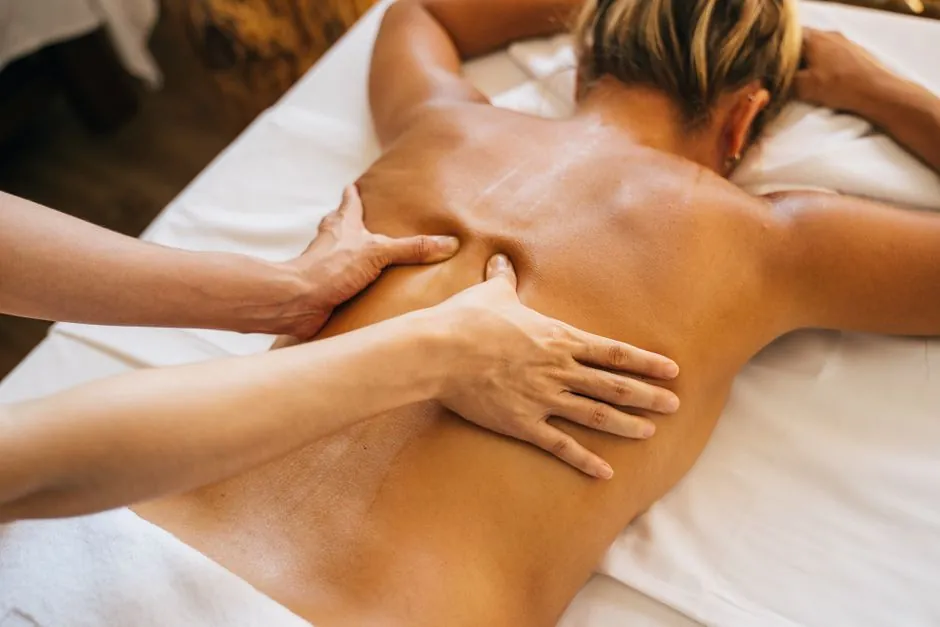
The setting is different too. At home or in a hotel I work on your own bed, made up with my massage blanket and fresh linens; at my studio it’s a large bed made for clients. Nobody gets down on the floor, and what to expect shows both set-ups.
If stiffness is the goal, any massage is only half the answer. A few minutes of your own hip and hamstring work on most days holds a change far better than a session on its own; my routine for hips that are tight from sitting is a good place to start.
How do I book the closest alternative?
Tell me which areas feel stiff and what you were hoping Thai would do. I’ll say honestly if sports & recovery or deep tissue gets close, or if you’d be happier with a Thai practitioner. Either of mine is AED 400 an hour at your home or hotel, or AED 300 at my studio, for 60, 90 or 120 minutes, with no deposit.
Every session is strictly professional, by appointment, with proper draping, and I treat both women and men. Message me on WhatsApp with your area and a time that suits you.
Frequently asked questions
Do you offer Thai massage in Dubai?
No. I don't offer Thai massage, and I'm not connected to any Thai spa. The closest thing I do is sports & recovery: an oil massage on a bed that includes assisted stretching of the hips and legs. For firm pressure on knots, deep tissue fits better. Tell me what you hoped Thai would do for you and I'll point you to the right one, or to a Thai practitioner.
Is Thai massage done with clothes on?
Yes. Traditional Thai massage is done fully clothed, in loose, comfortable clothes, on a padded mat on the floor, without oil. Many venues provide a loose top and trousers to change into. A 'Thai oil massage' on a menu is usually closer to an ordinary oil massage, so if stretching is the point, check that the session is on a mat and clothed.
Is Thai massage good for back pain?
It can help everyday stiffness from sitting, but strong stretching is a poor idea for back pain that came on suddenly, is getting worse, or comes with numbness or pain down a leg. Have that assessed by a doctor or physiotherapist first. For ordinary tightness, choose Thai if you want stretching, and a focused oil massage if you want sustained pressure on particular muscles.
Who should not have Thai massage?
Check with your doctor first if you're pregnant, have osteoporosis, a joint replacement or recent surgery, very loose joints, a recent sprain or strain, or take blood thinners. Anyone who finds kneeling or getting up from the floor difficult may be more comfortable with a bed-based massage. A good Thai practitioner asks about all of this before you lie down.
What is the closest alternative to Thai massage at home in Dubai?
With me, it's sports & recovery: an oil massage on your own bed, made up with my massage blanket, including assisted stretching of the hips and legs. It's AED 400 an hour at your home or hotel, or AED 300 at my studio, for 60, 90 or 120 minutes, with no deposit. It isn't Thai massage, and I'll never call it that.