By Mei Han, massage therapist in Dubai Updated 7 October 2026
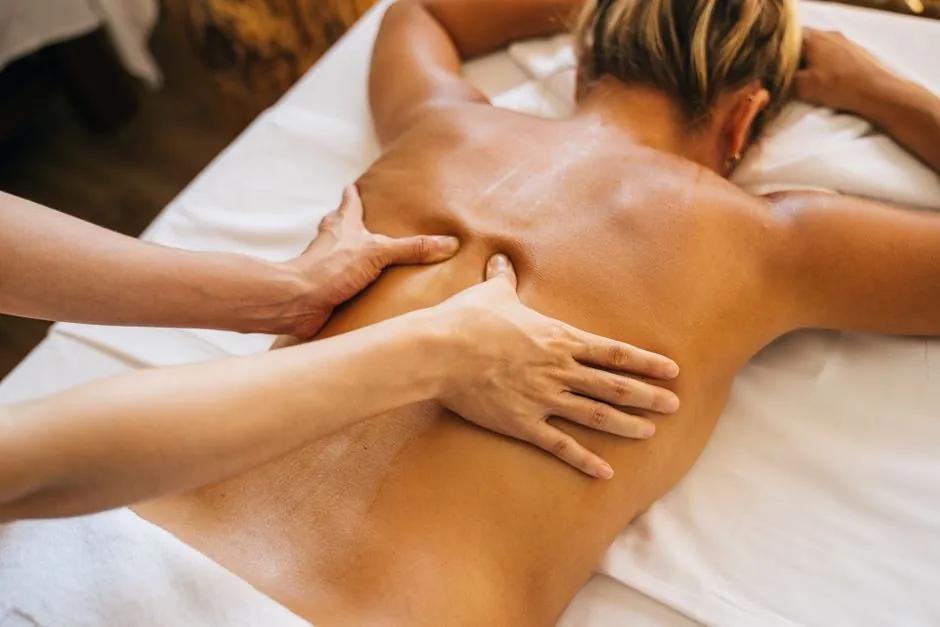
Choose a massage gun for brief self-directed work on a suitable, easily reached muscle; choose hands-on massage when you want to rest while someone adjusts pressure and follows an agreed plan. Choose clinical assessment for persistent, severe or unexplained pain. I’m Mei, an independent female massage therapist in Dubai, and the best choice starts with your goal, not the strongest sensation.
Which option fits the problem you are trying to solve?
A massage gun is a powered device that delivers repeated pulses, while a hands-on appointment lets a therapist vary contact, direction and pressure in response to your feedback. They can both be considered for ordinary muscular comfort, but they ask different things of you. With the device, you remain the operator for the whole session.
If your aim is a quick, manageable piece of self-care and you already know the device is appropriate for you, using one may be convenient. If your aim is to stop working, settle comfortably and have several areas addressed, an appointment may fit better. Neither choice should be used to postpone assessment of a new injury or an unexplained symptom.
| Decision | Massage gun | Hands-on appointment |
|---|---|---|
| Who operates it? | You choose the position and setting and hold the device | You explain your goal and give feedback while the therapist works |
| What about reach? | Limited by comfortable grip and access to the area | Areas and position are agreed before the session |
| How does contact change? | Through settings, placement and how you use the device | Through ongoing changes to hands-on technique and pressure |
| What does it require from your schedule? | A self-directed interval with the device available | A confirmed appointment and time to settle |
| Does it diagnose pain? | No | No |
The most useful question is not which feels more powerful. It is whether the option helps you achieve the kind of comfort or relaxation you want without making another area work harder. A device you struggle to hold is not necessarily the convenient choice it first appears to be.
When does a massage gun make practical sense?
A device can make sense when you want control over a small amount of self-directed work, can comfortably reach the intended muscle and understand the manufacturer’s instructions. You can choose when to start and stop without arranging a visit. That convenience is a real difference, even though it does not establish better results.
Cleveland Clinic’s discussion of massage guns recommends starting with low intensity, avoiding added force and keeping the device off bony areas. It also advises people with medical concerns or an injury to consult their healthcare team. Follow the instructions for your own device; this comparison is not a personalised operating guide.
Reach deserves an honest check. If you have to twist, brace or raise a tired arm for the entire time, operating the device may distract from the relief you wanted. Stop rather than force an awkward angle, and do not recruit someone else to press harder just because the area is difficult to reach yourself.
Control also includes knowing when to finish. Repeatedly returning to the same tender point because it still feels tight can turn a simple routine into a contest with the sensation. More time, more force and a stronger setting should not be treated as automatic improvements.
I have not tested or ranked devices for this guide, and I am not recommending a particular model or purchase. If you already own one, the decision is whether using it suits today’s goal. If you do not, you can still choose ordinary movement, rest or an appropriate appointment without buying another piece of equipment.
What does a hands-on appointment add?
An appointment gives you time to rest while the therapist follows an agreed scope and adapts to your feedback. That can be valuable when you want several comfortable areas included, dislike operating a device or simply want an uninterrupted break. You are paying for the time, attention and practical arrangement of that session.
Before I start, we discuss what you want, areas to avoid and how you prefer the pressure. During the massage, you can ask for a slower pace, a different focus or a pause. The purpose is not to reproduce the rapid pulse of a device with stronger hands-on pressure; it is to provide the type of massage that suits the agreed goal.
For training-related muscular tension, read about my Sports and recovery massage. For a quieter general wind-down, Swedish and relaxation massage may be a closer match. Choosing between those two starts with your priorities, rather than whether you have recently used a massage gun.
A home visit also changes who does the preparation. I bring a massage blanket, fresh linens and towels, a headrest, a bolster and oils, and work on your own bed. You need a quiet room and your bed; the session does not require you to hold a device or organise a self-massage position while trying to relax.
Human attention still has limits. I cannot diagnose the cause of a painful spot by feeling it, and a comfortable session is not evidence that an injury has resolved. The NCCIH overview of massage therapy describes limits in the evidence and advises against delaying medical care for massage.
Message me on WhatsApp about your goal and recent device use if you are considering an appointment. Tell me what felt comfortable, what did not, and which areas you want included; that is more helpful than asking for the strongest treatment available.
When should you choose neither option yet?
Pause both self-massage and a booking when the problem calls for assessment rather than another attempt at pressure. Persistent or severe pain, numbness, radiating pain or loss of normal function should be discussed with your doctor or a physiotherapist. Massage is supportive, not a substitute for finding out what is wrong.
Do not use either option over a suspected blood clot, a fresh significant injury, open skin or a region your clinician has told you to protect. If you take medication that affects bleeding, have recently had surgery or have another relevant medical condition, ask about suitability before experimenting with pressure. A softer setting does not settle those questions.
Your response to the device is useful information, not a diagnosis. If use leaves bruising, worsening discomfort or an unfamiliar symptom, stop and get appropriate advice instead of booking deep pressure to work through it. Mention the device use honestly when speaking with a clinician or arranging a later massage.
If the uncertainty is whether you need rehabilitation or a relaxation session, my guide to massage or physiotherapy explains that distinction. Neither a device advertisement nor a massage menu should decide your care when the underlying problem is unclear.
You also do not need to stack everything together. Using a gun, foam roller and a long massage in one day is not a requirement for recovery. If you are comparing self-care methods more broadly, the massage versus foam rolling guide addresses the different practical demands of body-weight pressure.
How do you make the final choice in Dubai?
Pick the simplest option that matches your goal and that you can use comfortably. For a small self-care task, a suitable device you already know may be enough. For a planned period of rest with hands-on work across agreed areas, choose an appointment; for symptoms needing assessment, choose the clinician first.
Before booking, write one sentence about the outcome you want: an unhurried wind-down, attention to ordinary training-related tension, or a session focused on particular comfortable areas. That sentence helps choose the service and duration. “The gun did not reach it” is useful context, but it does not by itself explain whether firm pressure is appropriate.
Home and hotel visits cost AED 400 per hour; studio sessions cost AED 300 per hour. The available lengths are 60, 90 and 120 minutes at the same hourly rate, with no deposit, cash payment and bank transfer on request. The pricing page shows the options; this guide makes no device-price comparison or claim that one choice saves everyone money.
I welcome both women and men by appointment, daily 10:00–23:00. Sessions are strictly professional, with proper draping and your ongoing agreement about pressure and areas. No device use is required before coming to me, and there is no need to make yourself sore in preparation.
Send me your massage goal on WhatsApp, with your Dubai area and preferred time. We can decide which hands-on service fits the appointment you want and confirm the practical details before the visit.
Frequently asked questions
Can a massage gun replace a massage appointment in Dubai?
It may suit brief self-directed work on an appropriate, easily reached muscle, but it does not provide the same experience as resting while a therapist adjusts hands-on work. Choose by your goal and comfort rather than power. Message me on WhatsApp if you want to discuss a hands-on session and recent device use.
Should I book deep tissue if a massage gun did not help?
Not automatically. A lack of relief does not show that you need stronger pressure, and persistent or severe pain needs assessment by your doctor or physiotherapist. If the issue is ordinary tension and massage is appropriate, tell me your goal on WhatsApp so we can choose the service and scope sensibly.
Should I use my massage gun before a sports massage?
You do not need to use a device to prepare for an appointment. Avoid treating several methods as a required routine, especially if the area is already tender or irritated. Tell me on WhatsApp what you have used recently and how it felt, so that information is part of the booking discussion.
What does a hands-on massage with Mei cost in Dubai?
Home and hotel appointments cost AED 400 per hour, and studio appointments cost AED 300 per hour. You can choose 60, 90 or 120 minutes at the same hourly rate, with no deposit. Payment is cash or bank transfer on request. Device prices vary and are not part of this appointment comparison.