By Mei Han, massage therapist in Dubai Updated 18 July 2026
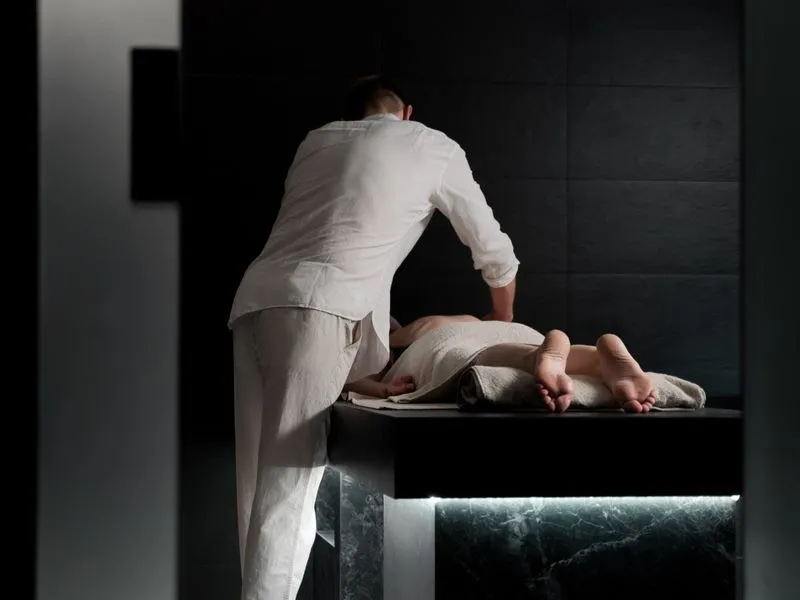
Feeling sore after a massage is normal, especially after deep or firm work. It’s a mild, achy tenderness — much like the day after a good workout — caused by muscles and soft tissue responding to pressure they’re not used to. It usually appears within a few hours, peaks the next day, and eases within 24 to 48 hours. Water, rest and gentle movement all help it pass.
I’m Mei, an independent female massage therapist in Dubai, and “why am I a bit sore?” is one of the questions I’m asked most, usually by text the morning after a deep-tissue session. It’s almost always nothing to worry about. Here’s what’s happening and what to do about it.
Is it normal to be sore after a massage?
Yes — mild soreness after a massage is common and completely normal, particularly after deep-tissue work, your first massage in a while, or a longer session. It’s a sign your muscles were worked, not a sign something went wrong. Think of it as the good kind of ache: dull, general, and easing by the hour rather than sharp or alarming.
There’s an important line to draw, though. A productive, workout-style tenderness is expected. Sharp, stabbing pain, significant bruising, or discomfort that lingers for days is not, and it’s worth mentioning to me and, if it persists, checking with your doctor. This guide is specifically about that ordinary next-day soreness; for the fuller picture on preparing and recovering, see my guide on what to do before and after a massage.
Why does massage make you sore?
Deep, unfamiliar pressure
Firm techniques reach the deeper layers of muscle and fascia that rarely get touched in daily life. Working through a tight, knotted area creates a small amount of the same kind of stress that exercise does, and your body responds with its natural repair process. That mild response is what you feel the next day. It’s the same idea as the muscle soreness after a first gym session in months — a sign of change, not damage. My deep-tissue massage is the treatment most likely to leave a little tenderness, precisely because it works the hardest.
Staying still, then getting up
Lying relaxed for an hour, then standing and moving again, can leave muscles feeling stiff for a short while. Being slightly dehydrated tends to make that stiffness feel a touch worse. Neither is serious, and both settle quickly once you’re up, moving gently and topped up with water.
A first massage or a long gap
If it’s your first massage, or your first in many months, your body simply isn’t used to the sensation, so it reacts a little more. The reassuring part is that this fades: people who come regularly report less and less soreness over time, as their muscles adapt to the work.
How long does massage soreness last?
For most people, soreness shows up within a few hours, peaks around the next morning, and is gone within 24 to 48 hours. A gentle relaxation massage may leave none at all, while a strong deep-tissue session might give you a day of that pleasant, worked feeling. If soreness is severe, comes with heavy bruising, or hasn’t settled after two or three days, don’t push through it — have it looked at by your doctor. Massage is a complement to good health, never a substitute for medical advice.
How to ease post-massage soreness
The simple things work best:
- Drink water through the rest of the day to stay comfortably hydrated.
- Rest the area and avoid intense training for the day; a gentle walk is fine.
- Use warmth — a warm shower or bath can relax the muscles further.
- Move gently with light stretching rather than sitting rigid for hours.
None of this is complicated, and the soreness passes on its own regardless. You’re simply helping your body along.
Can you avoid being sore next time?
Often, yes. The biggest factor is pressure, so tell me how deep you like the work — I’d far rather ease off than leave you tender. Building up over a few sessions rather than going very deep on day one helps too, as does choosing a gentler treatment like Swedish and relaxation massage when you want the benefits with none of the after-ache. If you’d like to plan the right pressure before I arrive, just message me on WhatsApp and tell me what your body needs.
Where you’re most likely to feel it
Soreness tends to appear wherever the work was deepest, which is usually wherever you were tightest to begin with. For desk-bound clients that’s often the neck, shoulders and upper back; for runners and padel players it’s the glutes, calves and the sides of the hips. If I’ve spent longer freeing one stubborn knot, that spot may feel the most worked the next day. It’s useful feedback, in a way — it shows you where your body was holding the most tension, and where it’s worth easing off at your desk or in your training.
Is more soreness a sign of a better massage?
No — and this is worth saying plainly, because some people believe they should feel wrecked for it to have “worked”. They shouldn’t. A good massage is judged by how you move and feel over the following days, not by how tender you are the next morning. Some of my most effective sessions leave no soreness at all. If a therapist routinely leaves you badly aching or bruised, that’s too much pressure, not a better outcome. The right depth is firm enough to make a difference and gentle enough to leave you glad you came.
When soreness is worth getting checked
Ordinary massage soreness is dull, mild and fading. Occasionally, though, something needs more attention. If you develop sharp or stabbing pain, notice significant bruising, feel numbness or tingling, or the discomfort is still there after two or three days, don’t just wait it out — see your doctor or a physiotherapist. This is rare with sensible, well-judged pressure, but it’s always the right call when something feels off. A massage should leave you feeling better within a day or so, not worse, and I’d always rather you got something checked than pushed through it.
Can you ease a sore spot yourself?
Gently, yes. A warm shower, slow stretching or light self-massage can all soothe a tender area, and there’s no harm in any of it. What I’d avoid is digging hard into a sore muscle to “work it out”, which tends to irritate it rather than settle it. Give the area a day of gentle care and it usually sorts itself out. My self-help tips have simple techniques you can use between visits.
Book your next massage in Dubai
A little next-day soreness is a normal part of good bodywork, not a reason to avoid it — and it’s easy to manage. When you’re ready for your next session, home visits are AED 400 an hour and studio visits AED 300 an hour, for 60, 90 or 120 minutes, with no deposit and cash on the day. You can see the full breakdown on my pricing page.
Send me a WhatsApp, tell me how firm you’d like it, and I’ll tailor the pressure so you get the results you want and still feel great the next day.
Frequently asked questions
Is it normal to be sore after a massage?
Yes. Mild soreness is common and normal, especially after deep-tissue work, your first massage in a while, or a longer session. It's a dull, workout-style ache that shows your muscles were worked, not that anything went wrong. Sharp pain, heavy bruising or soreness lasting beyond a couple of days is different, though — mention it to me and, if it persists, check with your doctor.
How long does soreness after a massage last?
For most people it appears within a few hours, peaks the next morning, and eases within 24 to 48 hours. A gentle relaxation massage may leave none at all. If soreness is severe, comes with significant bruising, or hasn't settled after two or three days, don't push through it — have it looked at by your doctor rather than assuming it's normal.
Should I be sore after every massage?
No. Soreness isn't the goal or a measure of success. Lighter relaxation work often leaves none, while deep-tissue sessions, first massages and long gaps between visits make it more likely. As your body gets used to regular massage, most people find they feel less and less tender afterwards. Tell me your preferred pressure and I'll work to it.
How do I get rid of soreness after a massage?
Drink water through the day, rest the area, and avoid intense training until tomorrow. A warm shower or bath and some gentle movement help too. Mostly, though, it settles on its own within a day or two — you're just easing it along. If it feels sharp rather than achy, that's worth checking with your doctor.
Does being sore mean the massage worked?
Not necessarily. Both sore and completely comfortable sessions can be effective — soreness simply reflects how deep the work was and how used to it your body is, not how well it worked. If you'd rather feel the benefits without the after-ache, a lighter treatment or gentler pressure does the job. Just let me know when you book.