By Mei Han, massage therapist in Dubai Updated 18 July 2026
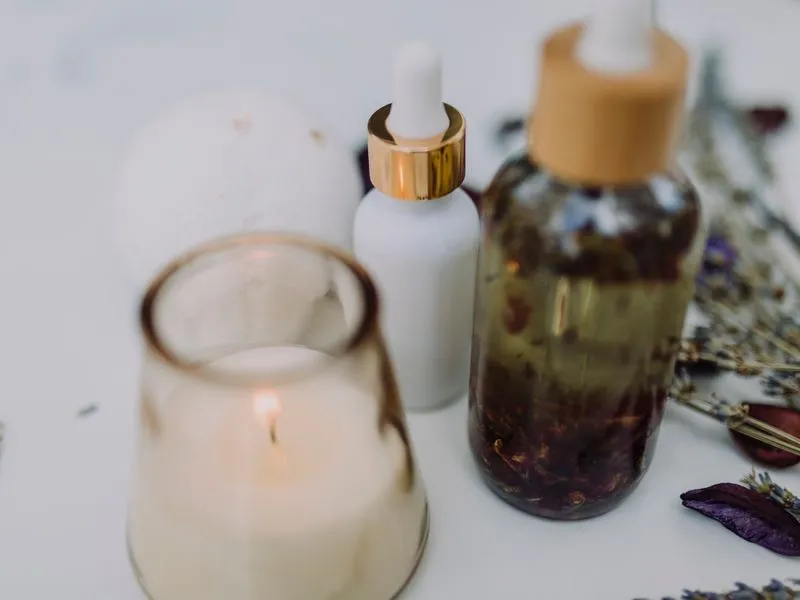
Massage can be genuinely helpful for anxiety, though it’s a support rather than a cure. It won’t treat the root causes, but it can ease the physical side of stress — tight shoulders, a clenched jaw, shallow breathing — and calm your nervous system enough to help you sleep and think more clearly. If anxiety is ongoing or overwhelming, please also speak to your doctor.
I’m Mei, an independent female massage therapist in Dubai, and a lot of my clients come to me during stressful stretches — a demanding job, a move to a new city, or simply months of running on empty. Here’s an honest look at how massage can help with anxiety, and where its limits are.
How massage helps with anxiety
It eases the body’s stress response
Anxiety isn’t only in your head — it settles in your body. Shoulders creep up towards your ears, your jaw tightens, your breathing turns shallow and quick, and everything feels braced. Massage works directly on that physical layer: slow, firm-but-gentle strokes help those muscles let go, and as the body softens, the sense of being permanently “on guard” often eases with it.
That calming effect is real and worth having. When your body physically relaxes, it becomes much easier for your mind to follow. Many people describe the hour as the first time all week they’ve properly exhaled.
It supports better sleep
Anxiety and poor sleep feed each other — a worried mind keeps you awake, and exhaustion makes everything feel more overwhelming the next day. By helping you unwind and settle your nervous system, massage can make it easier to drop off and rest more deeply. I’ve written more on that in my guide on whether massage helps you sleep, because for a lot of anxious clients, better sleep is where they feel the biggest difference.
Which massage is best for anxiety?
For anxiety, gentler is usually better. Intense, deep-tissue work has its place, but when the goal is calm, slow and soothing wins. My aromatherapy massage is a favourite here: calming essential oils, warmth and unhurried, rhythmic strokes make it easy to switch off. A Swedish and relaxation massage is just as suitable — flowing, comforting and designed purely to help you let go.
There’s no need to decide alone. Tell me how you’ve been feeling and I’ll shape the pressure, pace and oils around what will actually calm you. If you’d like help choosing, message me on WhatsApp and we’ll pick the right treatment together.
An honest note: what massage can’t do
I want to be clear, because it matters. Massage can ease the physical tension that comes with anxiety and give you a genuine window of calm — but it doesn’t treat the underlying causes, and it isn’t a cure or a replacement for professional care. If your anxiety is persistent, intense, or getting in the way of daily life, please speak to your doctor or a mental-health professional. That’s not me passing you along; it’s me being honest about what an hour of massage can and can’t do.
Used alongside proper support, though, massage is a lovely, practical way to look after yourself. It gives your body regular permission to rest, and that’s something many anxious people rarely allow themselves.
Why a home massage can suit anxious people
If busy places wind you up, going to a spa can add stress before you’ve even started — the reception, the waiting area, strangers, the small talk. Having the massage at home removes all of that. You’re in your own space, on your own terms, with no crowd, no queue and nowhere to be afterwards. As an independent female therapist, I’m the only person you’ll deal with from first message to goodbye, which many anxious clients find far easier than a busy venue with a rota of staff. You can have your own music on, keep the lighting how you like it, and simply exhale.
Nervous about the massage itself?
It’s common to feel anxious about the appointment, not just about life in general — whether you’ll relax, what’s expected, how you’ll feel undressed in front of someone. That’s completely understandable, and it changes nothing about how welcome you are. You lead the whole session: you undress only to your comfort, stay properly draped throughout, and can ask me to adjust anything or stop at any point. Nothing is a test. If it helps to “meet” me first, message me on WhatsApp beforehand and ask whatever you need — a lot of people feel much calmer once we’ve simply exchanged a few messages and I’m no longer a stranger at the door.
Small things that make the hour more calming
A few easy touches help you get more from a session when you’re feeling anxious. Book a time when you won’t have to rush off afterwards, so you can stay in that settled state. Put your phone on silent and out of reach. Have the room a touch warm, the lights low, and a glass of water ready. Tell me at the start if you’d rather I kept conversation to a minimum — plenty of people prefer near-silence, and that’s completely fine. And breathe slowly, especially as I begin; letting your out-breath lengthen is one of the quickest ways to tell your nervous system it’s safe to unwind.
Making it a calm habit, not a one-off
A single massage can lift a heavy week, but the effect on stress tends to build with a little regularity. When life is particularly demanding, some people find a session every week or two gives them a reliable point in the diary to properly switch off, then space it out again as things settle. There’s no pressure to commit to anything, and no packages to buy — you simply book again when you feel you need it. An unhurried evening session works especially well, letting the calm carry straight through to a better night’s sleep. The aim isn’t to solve everything in one go; it’s to give your body regular, genuine permission to rest.
When to reach beyond a massage
A massage is a lovely support, but some signs mean you deserve more than an hour of calm. If anxiety is with you most days, stops you sleeping night after night, keeps you from work or the people and things you enjoy, brings on panic attacks, or ever tips into thoughts of harming yourself, please reach out to your doctor or a mental-health professional. That isn’t a failure or an overreaction — it’s exactly what that support exists for, and it helps. Massage can sit happily alongside it, easing the physical weight you carry while the deeper work is handled by the right people. If you’re ever unsure how serious things have become, that uncertainty is itself a good reason to talk to a professional who can properly assess it. Looking after your mind deserves the same care you’d give a persistent physical problem.
A calm hour in Dubai
If stress has been sitting heavy on you, a quiet, unhurried massage in your own home — or at my studio — can be a real reset. There’s no account, no deposit and no fuss: home visits are AED 400 an hour and studio sessions AED 300 an hour, for 60, 90 or 120 minutes — you can see the full pricing any time.
When you’re ready to give yourself that hour, send me a WhatsApp, tell me a little about how you’ve been feeling, and I’ll take care of the rest.
Frequently asked questions
Does massage help with anxiety?
It can help ease the physical side of anxiety — tight shoulders, a clenched jaw, shallow breathing — and calm your nervous system, which many people find settles a racing mind and supports better sleep. It's a genuine support, not a cure, and it works best alongside the care of your doctor or a mental-health professional. Message me on WhatsApp and we'll choose a calming treatment for you.
Which type of massage is best for anxiety?
Gentle, slow treatments tend to work best. A Swedish and relaxation massage or an aromatherapy session, with calming oils and unhurried strokes, is more soothing than intense deep-tissue work. The aim is to quieten the nervous system rather than dig hard into muscle. If you're unsure, tell me how you've been feeling and I'll tailor the pressure and pace to help you unwind.
Can massage replace therapy or medication for anxiety?
No. Massage can ease physical tension and help you feel calmer for a while, but it doesn't treat the underlying causes of anxiety, and it's not a substitute for therapy, medication or professional support. Think of it as a helpful complement. Please keep working with your doctor or therapist, and use massage as one soothing part of looking after yourself.
How often should I get a massage for stress and anxiety?
There's no fixed rule. During a stressful stretch, some people find a session every week or two really helps them cope, then space it out as things settle. Regularity matters more than intensity for stress. My guide on how often to get a massage goes into this, and you can always message me to plan a rhythm that fits your life and budget.
Does aromatherapy massage help with anxiety?
Many people find it does. The combination of calming essential oils, warmth and slow, rhythmic strokes can help ease physical tension and create a genuine sense of calm. It won't cure anxiety, but as a way to switch off and reset, it's one of my most soothing treatments. Aromatherapy is AED 400 an hour at home or AED 300 at my studio — message me to book.