By Mei Han, massage therapist in Dubai Updated 18 July 2026
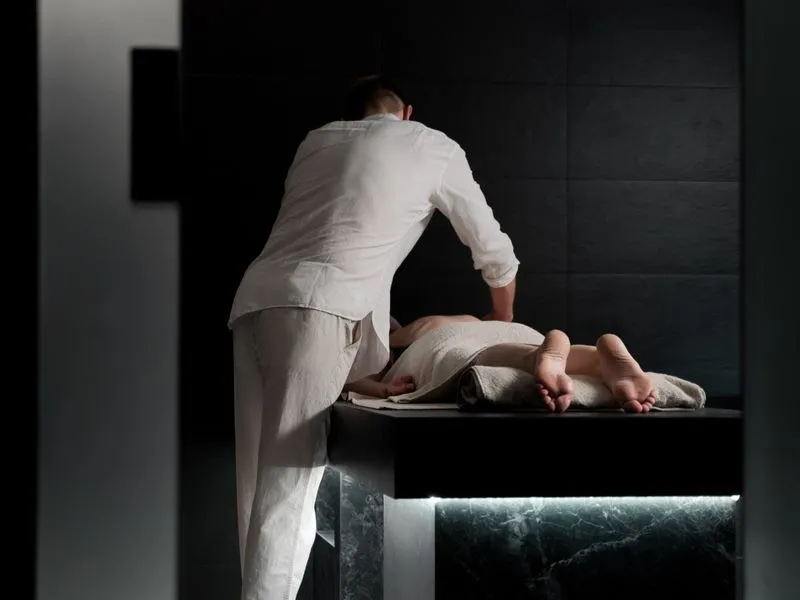
Wrist and forearm pain from typing, mouse work or padel is often less about the wrist itself and more about tight, overworked forearm muscle pulling on it — and massage to the forearms can help ease that. I’m Mei, an independent female massage therapist in Dubai, and repetitive-strain aches in the arms are increasingly common with screen work and the padel boom. Here’s how hands-on work helps, and the finger symptoms that mean you should see a doctor first.
Why the problem is often in your forearm, not your wrist
Your fingers and wrist are moved by muscles that mostly sit in your forearm, with long tendons running down to the hand. Type, scroll, grip a mouse or swing a racket for hours and those forearm muscles stay switched on, tightening and developing tender knots along their length. You feel the ache at the wrist — where the tendons cross — but the overloaded muscle causing it is usually higher up.
Screen work is the everyday driver: a mouse held with a slightly bent, deviated wrist, a laptop trackpad, endless scrolling on a phone. Add a sport like padel or tennis, hugely popular in Dubai, and the gripping and repeated swings load the same forearm muscles even harder — the very pattern behind what people call tennis elbow and golfer’s elbow, where those muscles pull painfully at their attachment near the elbow.
The typical picture is aching or burning in the forearm, tenderness near the wrist or elbow, a weaker or fatigued grip, and stiffness after a long day at the keyboard or an evening on court. That muscular, overuse pattern is what massage is well suited to.
How I work on tight forearms and wrists
For this I use deep tissue massage focused on the forearm rather than forcing the wrist joint. I warm and release the muscles on both sides of the forearm — the flexors on the palm side and the extensors on the back — working along their length to soften the tight bands and ease the pull on the wrist and elbow. I’ll gently mobilise the wrist and hand, and because tight forearms so often travel with tight shoulders and neck from the same desk posture, I’ll usually check those too.
The pressure is firm but never a fight; forearms can be surprisingly tender, so I build up gradually and keep checking in. Everything is strictly professional, with proper draping throughout, and I work with both women and men. If your ache is driven as much by court sport as by the keyboard, I can angle the session towards recovery from that load — some of what I do overlaps with sports and recovery work for active clients.
One session eases the tightness and grip fatigue; if it’s a long-standing RSI pattern from daily screen work, a few sessions plus better setup habits help more than a one-off, because we’re unwinding a repetitive load. Message me on WhatsApp describing your work and sport, and I’ll suggest whether to focus on the forearms alone or include the neck and shoulders.
Carpal tunnel and other signs to see a doctor about
Massage suits muscular forearm overload, but some wrist symptoms point to a nerve and need a doctor rather than massage. See your doctor if you have numbness or tingling in the thumb, index and middle fingers — classically worse at night, sometimes waking you and eased by shaking the hand — or weakness and clumsiness, like dropping things or struggling with buttons and jars. Those can be signs of carpal tunnel syndrome, which is nerve compression at the wrist and needs proper assessment.
Get checked too if pain followed a fall or an obvious injury, if the wrist is swollen, hot or won’t bear weight, if you can’t move it normally, or if pain is severe or hasn’t eased after two to three weeks. None of this automatically means anything serious, but it sits outside what massage should be the first answer to. Once a professional has told you what you’re dealing with, massage can be a useful part of managing any muscular tension alongside — it supports, it doesn’t replace medical care.
Simple relief between sessions
Small setup changes take a lot of load off. Keep your wrist straight and neutral at the keyboard rather than bent up or off to one side; keep the mouse close so you’re not reaching; and rest your forearms lightly rather than planting your wrists hard on the edge of the desk. Every 30 to 40 minutes, take your hands off the keys, gently open and stretch the fingers, and roll the wrists. For padel and tennis, check your grip size and don’t jump your court time up too fast.
I’ve put together specific self-release and stretches for screen and racket-sport arms in my guide on wrist and forearm relief for typing and padel, which pairs nicely with hands-on sessions. If the ache is getting in the way of work or your game, send me a WhatsApp and I’ll suggest a plan.
Padel elbow, tennis elbow and your grip
A fair bit of the wrist and forearm pain I’m asked about in Dubai right now comes straight off the padel court. The gripping and repeated swinging load the forearm muscles where they attach around the elbow — the outer side gives you what’s known as tennis elbow, the inner side golfer’s elbow — and you feel it as a tender, achy point at the elbow plus tightness running down towards the wrist.
Massage can help by releasing the overloaded forearm muscles pulling on those attachment points, easing the tension rather than leaving it to grind away every time you play. I work along the length of the flexors and extensors and gently around the elbow, always building pressure up slowly because these areas get genuinely tender when they’re irritated.
A couple of things away from the massage make a real difference here. Check your grip size, since too small a handle makes you squeeze harder than you need to; don’t ramp your court time up too quickly; and warm the forearms through before you play rather than going in cold. If the elbow pain is sharp, swelling, or simply not settling after a few weeks, that’s one to get looked at by a doctor or physiotherapist rather than playing through it — massage supports the muscular side, it doesn’t replace proper assessment of a stubborn elbow.
Booking a wrist and forearm massage in Dubai
I come to you — home, hotel or serviced apartment — anywhere in Dubai, with my massage blanket for your own bed. A home visit is AED 400 per hour; my studio is AED 300 per hour. Forearm and wrist work fits well in 60 minutes, or choose 90 to include the neck and shoulders that usually come with it. There’s no deposit, payment is cash on the day (bank transfer on request), and I work daily from 10:00 to 23:00 by appointment, often same day. It’s all on the pricing page.
If typing or padel has left your arms aching, message me on WhatsApp and we’ll book a time that suits. I bring everything; you just need somewhere to lie down.
Frequently asked questions
Can massage help wrist and forearm pain from typing in Dubai?
Often, yes — a lot of 'wrist' pain from typing and mouse work is really tight, overworked forearm muscle pulling on the wrist, and deep tissue massage to the forearms can help ease it. It won't correct a joint problem, so if you have numbness or tingling in the fingers, weakness or night-time symptoms, see a doctor to check for carpal tunnel first.
Why do my forearms ache after padel or tennis?
Racket sports load the forearm muscles hard through gripping and repeated swings, and they tighten and get tender where they attach near the elbow and run down to the wrist — the same pattern behind tennis and golfer's elbow. Massage can help release that overloaded muscle. Tell me on WhatsApp what you play and I'll focus the session on the right areas.
How much is a forearm and wrist massage in Dubai?
A home visit anywhere in Dubai is AED 400 per hour; my studio is AED 300 per hour. Forearm and wrist work fits comfortably in a 60-minute session, or add the neck and shoulders in 90 since they're often part of the picture. No deposit, cash on the day or bank transfer on request, daily 10:00 to 23:00. WhatsApp me to book.
Is my wrist pain carpal tunnel, and should I get a massage?
Numbness or tingling in the thumb, index and middle fingers — often worse at night — plus weakness or dropping things can point to carpal tunnel, and that needs a doctor's assessment, not massage as a first step. Massage suits muscular forearm tightness rather than nerve compression at the wrist. Get it checked, and once you know what you're dealing with, message me and I'll advise.
Do you do home-visit massage for RSI-type wrist pain in Dubai?
Yes — I come to homes, offices set up for it, hotels and serviced apartments across Dubai with my massage blanket for your own bed. It's strictly professional with proper draping, by appointment, often same day. Send me a WhatsApp describing your work and sport, and I'll suggest whether to focus on forearms alone or include the neck and shoulders.