By Mei Han, massage therapist in Dubai Updated 3 October 2026
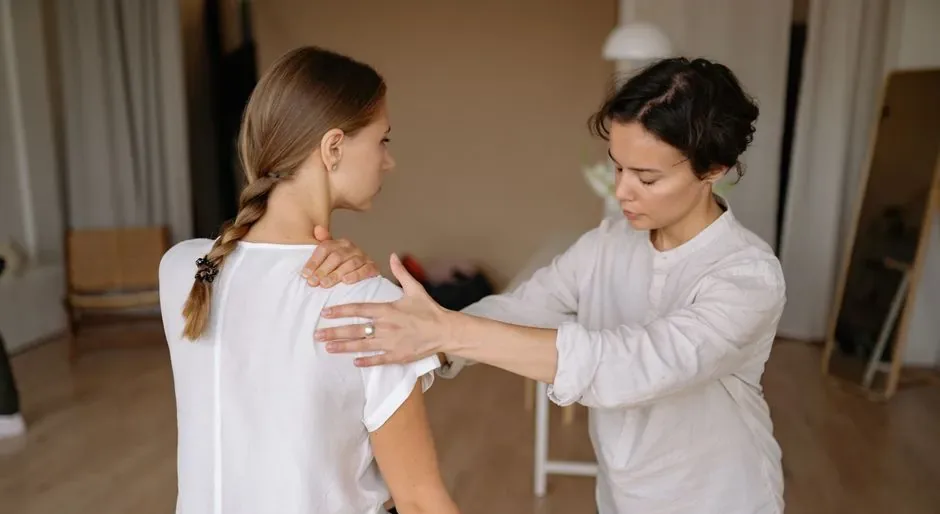
Massage can help ease the tight lower back, glute and hip muscles that often travel with sciatica — but it doesn’t treat the irritated nerve causing it. So the order matters: see a doctor or physiotherapist first, then, with their go-ahead, book a gentle 60-minute session, often side-lying, that works around the painful path rather than into it. I’m Mei, an independent female massage therapist in Dubai, and that’s exactly how I approach it.
What sciatica actually is
Sciatica isn’t really a condition in itself — it’s a set of symptoms caused by irritation or compression of the sciatic nerve, the large nerve that runs from your lower back, through the buttock and down the back of each leg. The NHS describes sciatica as pain, tingling or numbness travelling along that path, most often caused by a slipped (herniated) disc or narrowing in the spine.
The classic signs are pain that radiates from the lower back or buttock down one leg, sometimes past the knee to the foot. It can come with numbness, pins and needles, a burning quality, or weakness in the leg. That radiating, travelling nature is what sets sciatica apart from ordinary muscular back pain, and it’s exactly why it needs a proper assessment rather than guesswork. Because the root cause usually sits at the spine, no amount of massage can release the compression itself.
Disc-related sciatica or a tight piriformis?
Two quite different problems get called sciatica, and the difference changes what massage can offer.
| Disc or spine-related sciatica | Piriformis-type pain | |
|---|---|---|
| Where it starts | The lower back, often with back pain | Deep in one buttock |
| What makes it worse | Bending, coughing, sneezing, sitting | Sitting for long, especially on a hard seat; climbing stairs |
| What massage can do | Ease the guarding muscles around it — the nerve itself needs medical treatment | Careful work on the glutes and deep hip muscles is more directly relevant, once assessed |
The piriformis is a small muscle deep in the buttock, and the sciatic nerve passes right beside it. When it’s tight and irritable it can produce sciatica-like symptoms — often called piriformis syndrome. Telling the two apart is a job for a doctor or physiotherapist, not me, but if you’ve been told yours is muscular, my guide to massage for glute and piriformis pain covers that side in more detail.
See a doctor or physiotherapist first — this matters
I’m putting this in the middle of the page, not buried at the end, because for sciatica it’s the most important thing I can tell you. Before you think about massage, get the cause identified and the right treatment started.
Get urgent medical help — not a massage — if you have numbness around your groin or the saddle area, any loss of bladder or bowel control, or sudden significant weakness in a leg or foot. Those are red flags that need immediate attention. Also see a doctor promptly if the leg pain is severe, is getting worse, follows an injury, or has persisted beyond a couple of weeks.
How massage can help once you’re cleared
Sciatica rarely travels alone. The muscles in the lower back, the glutes and the hips often become tight and protective from weeks of bracing against the pain, and that added tension can make everything feel worse. Easing those muscles won’t undo the nerve irritation, but it can reduce the muscular discomfort layered on top and help you move more freely.
I keep the work gentle and led entirely by your comfort. I never press directly into sharp nerve pain or try to force anything. Careful, calm deep tissue work around — not into — the tight glutes and lower back can help those muscles let go, and a sports and recovery approach suits people whose flare-ups are linked to training or activity. Relaxation matters too: when your nervous system is calmer, muscle guarding tends to ease, and pain often feels more manageable. If you’ve been cleared and aren’t sure a session suits your stage of recovery, send me a WhatsApp with what your clinician said and I’ll tell you honestly.
What a gentle, sciatica-aware session looks like
I bring my massage blanket, fresh linens and oils to you, so you only need a quiet room and your bed. We begin with a proper conversation: what your doctor or physiotherapist has said, where the pain travels, what eases or worsens it, and what you’ve been advised to avoid. If anything you tell me suggests you haven’t been fully assessed, I’ll ask you to sort that out first.
Positioning is chosen for your comfort — often side-lying with a bolster between the knees, because lying flat on your front can aggravate a sensitive back. Everything is strictly professional, with proper draping the whole time, and I treat both women and men. If any technique reproduces your shooting leg pain, we stop and change approach immediately.
What to expect over the following weeks
Sciatica has good days and bad days. On an irritable day I’ll do less and keep things very gentle; on a calmer day I can do more with the surrounding muscles. The nerve settles on its own timeline as your treatment and prescribed exercises do their work, so think of massage as the part that keeps you less tensed-up while that happens.
My rule of thumb: if you feel looser and no worse for a day or two afterwards, a session every one to two weeks during recovery is reasonable. If your leg symptoms flare after a session, tell me and your clinician, and we pause.
Booking massage for sciatica in Dubai
If you’ve been assessed and your clinician is happy for you to have massage, I come to your home, hotel or serviced apartment anywhere in Dubai, or you can visit my studio. Home visits are AED 400 per hour and the studio is AED 300 per hour, with 60, 90 or 120-minute sessions at the same hourly rate — no deposit, cash on the day (bank transfer on request). Full details are on my pricing page.
To book, message me on WhatsApp, tell me your area, and mention what your doctor or physiotherapist has advised so I can plan a session that fits safely around it.
Frequently asked questions
Can massage help sciatica in Dubai?
Massage can offer supportive relief by easing the tight lower back, glute and hip muscles that often accompany sciatica, which may reduce discomfort. It does not treat the nerve compression itself, so see a doctor or physiotherapist for a diagnosis first. Once you're cleared, I'd book a gentle 60-minute session, often side-lying, focused on the lower back, glutes and hips.
Is it safe to get a massage with sciatica?
Often yes, once a doctor or physiotherapist has assessed you and is happy for you to have massage. I keep pressure gentle around the affected area and never work directly on sharp nerve pain. If your leg pain is severe, or you have numbness or weakness, get medical advice before booking. Message me and we'll talk it through.
How much does a massage for sciatica cost in Dubai?
AED 400 per hour for a home visit anywhere in Dubai, or AED 300 per hour at my studio, with 60, 90 or 120-minute sessions at the same hourly rate. There's no deposit and you pay cash on the day. Massage is supportive care here, alongside — not instead of — your medical treatment.
When is sciatica a medical emergency?
Get urgent medical help if you have numbness around the groin or saddle area, loss of bladder or bowel control, or sudden severe weakness in a leg. These are red flags that need immediate attention. For persistent leg pain, numbness or tingling, see a doctor or physiotherapist before considering massage.
Do you do home-visit massage for sciatica across Dubai?
Yes, once you've been medically assessed and cleared for massage. I come to your home, hotel or serviced apartment anywhere in Dubai, daily from 10am to 11pm by appointment. I'll keep the session gentle and led by your comfort. WhatsApp me your area and I'll help you plan a suitable time.