By Mei Han, massage therapist in Dubai Updated 21 October 2026
Short answer
Massage may be possible for someone with stable, understood low blood pressure and no concerning symptoms, but one reading cannot determine suitability. Recurrent dizziness, fainting, new symptoms or uncertainty should be discussed with a doctor before booking.
In Dubai and want hands-on help? Message Mei on WhatsApp · female therapist, AED 400/hr at home, no deposit.

Massage may be possible when low blood pressure is stable, understood and not causing concerning symptoms, but massage does not treat hypotension or correct a reading. I’m Mei, an independent female massage therapist in Dubai, and I ask anyone with dizziness, fainting, new symptoms or uncertainty to get medical advice before arranging an appointment.
Does low blood pressure automatically rule out massage?
No single reading answers the booking question, but recurrent dizziness, fainting or a newly low reading needs medical advice before massage. A low result without symptoms can mean something different from repeated light-headedness or episodes that interfere with standing and walking, so I cannot decide suitability from one number alone.
The NHS guidance on low blood pressure lists possible symptoms such as light-headedness or dizziness, feeling sick, blurred vision, weakness, confusion and fainting. It also explains that postural hypotension relates to symptoms occurring after standing or changing position. That matters during a massage appointment because people usually move from lying down to sitting and then standing. If the immediate problem is feeling dizzy after massage, follow the safety steps on that page rather than assuming the cause is low blood pressure.
Massage for low blood pressure should never be presented as a way to raise or lower a reading. It does not replace a medical assessment, prescribed medicine or an individual plan from your clinician. I will not advise you to change medicine, salt intake or fluid intake, and you should not alter any of these against your clinician’s advice.
How you feel is more useful for appointment planning than trying to label every low reading yourself. Dubai heat, a missed meal, alcohol, travel or dehydration may affect how someone feels, but neither you nor I should assume that one of these is the cause. If symptoms are recurring, new or unexplained, a doctor should assess them first.
This page is specifically about low blood pressure, symptoms and safer position changes. If your concern is a raised reading, see my separate guide to massage with high blood pressure in Dubai.
What should you check before booking?
Check the cause, current symptoms, medicines and the clinician’s advice rather than asking massage to correct the number. If you have been told why your pressure runs low and have clear guidance about normal activity, share that context when you enquire.
| Situation | Sensible action before massage |
|---|---|
| Stable, known low reading without symptoms | Follow your existing clinical advice and tell me about the situation before confirming |
| Dizzy when standing or changing position | Ask your doctor whether massage and repeated position changes are appropriate |
| New medicine or a recent change in readings | Check with the prescribing clinician rather than adjusting medicine yourself |
| Fainted, confused or currently unwell | Postpone massage and seek appropriate medical help |
A short booking message should cover what you actually experience. Tell me whether you feel well at rest, whether standing brings on symptoms, whether you have fainted recently and what your clinician has advised. I do not need you to make a diagnosis; I need enough practical information to avoid treating massage as the answer to a medical question.
Before considering massage for low blood pressure, work through this checklist:
- Confirm whether the low reading is familiar and already discussed with a doctor.
- Note any dizziness, nausea, weakness, blurred vision, confusion or fainting.
- Consider whether symptoms appear when moving from lying to sitting or sitting to standing.
- Follow your clinician’s instructions about medicines, food, salt and fluids.
- Choose a time when you are not rushing, overheated, unwell or affected by alcohol.
- Plan to pause after the session rather than standing and leaving immediately.
The NHS gives general self-care advice that includes getting up slowly and taking care when moving from lying to sitting and standing. It also mentions drinking more water, but your own clinician’s advice takes priority, particularly if you have another condition or have been given specific fluid guidance.
If you want to discuss practical arrangements, message me on WhatsApp. An enquiry is not a medical assessment, but clear information helps us decide whether booking should wait.
How can position changes be handled?
Move gradually from lying to sitting to standing, pause between stages and tell me immediately if you feel light-headed, sick, weak or visually unclear. There is no benefit in hiding a symptom or trying to push through it.
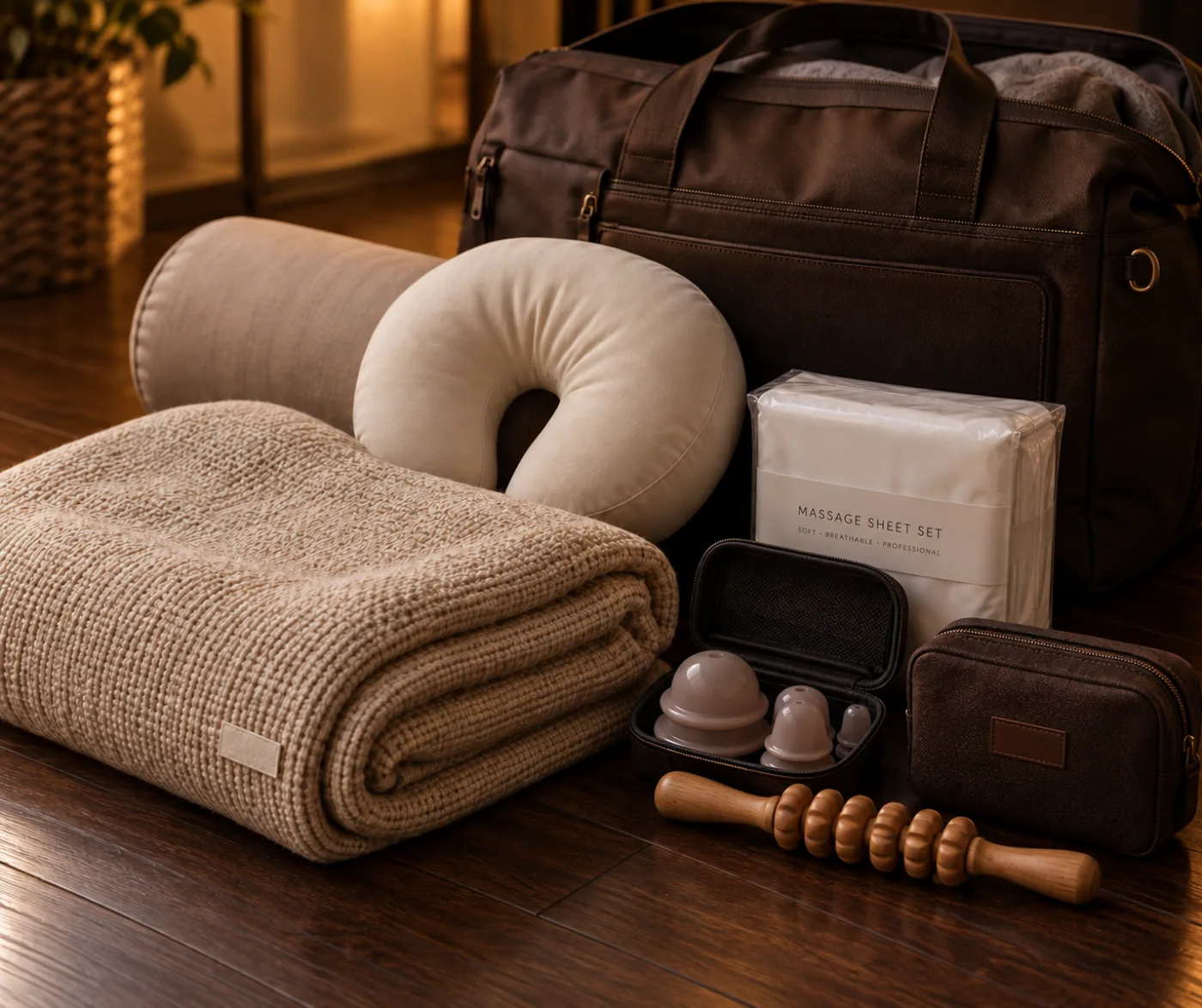
For a home or hotel appointment, I work on your own bed with a massage blanket and fresh linens. At my studio, I use a large bed. Either setting can allow an unhurried transition, but the setup cannot guarantee that dizziness or fainting will not occur.
During massage with hypotension, communication matters from the start. I can check how you feel before a position change, give you time to roll or sit up and allow a seated pause before you stand. If symptoms appear, the appropriate response may be to stop rather than continue with a different technique.
The practical sequence is simple: finish the hands-on work, remain still briefly, move to sitting slowly, pause, then stand only when you feel ready and safe. If you usually need assistance or cannot change position safely, massage should wait until your doctor has advised what is appropriate and a suitable support plan is in place.
Symptoms can overlap with other problems. If spinning or balance disturbance is the main issue, my guide to massage with vertigo in Dubai explains why the cause and movement triggers should be clarified before booking. Neither guide offers a diagnosis.
Which massage and pressure make sense?
Choose a realistic relaxation or comfort goal; do not select deep pressure or lymphatic drainage as a blood-pressure treatment. Stronger pressure is not better, and no technique should be used to promise a change in your readings.
For someone who has medical clearance and feels stable, Swedish and relaxation massage may suit a goal such as unwinding or easing general muscle tension. Deep tissue may be considered for a separate muscular concern, but only when stronger work is otherwise suitable and not because the pressure is expected to influence hypotension.
Sports and recovery massage is for activity-related mobility and muscle recovery goals. Aromatherapy may support a calm setting, while lymphatic drainage has its own gentle technique and is not a weight-loss method or blood-pressure treatment. Prenatal and postnatal massage requires particular care with positioning; anyone pregnant should consult her doctor or midwife before booking, especially if she has low readings, dizziness or other symptoms.
These are the only massage services I offer. The choice should be based on comfort, muscle tension, relaxation or recovery—not an attempt to correct circulation or treat a medical condition. You can review the current session rates and durations before deciding whether a 60-, 90- or 120-minute appointment is appropriate.
My work is strictly professional, with proper draping throughout. I see both women and men, daily from 10:00–23:00, by appointment. Same-day times are often possible, but health uncertainty should never be rushed simply because a slot is available.
When should massage wait?
Postpone when symptoms are active, the cause is being investigated, advice is unclear or you cannot change position safely. It is better to delay an appointment than to use massage as a test of whether you are well enough.
Massage for low blood pressure should wait after fainting or when you feel markedly dizzy, weak, confused, sick or visually unclear. It should also wait if a newly low reading follows a medicine change and you have not yet spoken with the prescribing clinician. I cannot tell you to skip or adjust medicine before a session.
Seek appropriate urgent medical help for fainting, chest pain, breathing difficulty, confusion or an injury caused by a fall. Do not travel to a massage appointment or rely on WhatsApp advice when urgent symptoms are present.
A separate muscular complaint also needs sensible boundaries. Persistent or severe pain, numbness or radiating pain should be assessed by your doctor or a physiotherapist; massage can sometimes support comfort, but it is not a substitute for investigation or treatment. My what to expect from an appointment page explains the normal setup and professional boundaries once massage is considered appropriate.
If you are well, have followed your clinician’s advice and want to ask about an appointment, the rates are simple: home and hotel visits are AED 400 per hour, while studio sessions are AED 300 per hour; 60, 90 and 120 minutes use the same hourly rate. There is no deposit, and payment is by cash or bank transfer on request.
Send this WhatsApp message with your symptoms, clinician’s advice, preferred duration and Dubai area. I will help with the practical booking details, while medical suitability remains a question for your clinician.
Frequently asked questions
Is massage safe if I have low blood pressure?
It may be possible if your low reading is stable, understood and not causing concerning symptoms, but one number cannot establish safety. If you have recurrent dizziness, fainting, weakness, confusion or a newly low reading, speak with your doctor first. Massage does not replace assessment, medicine or your clinician's plan.
Can massage raise blood pressure if it is too low?
Massage should not be used or advertised as a way to raise blood pressure. Its realistic goals are relaxation, comfort and help with suitable muscle tension. If your readings have changed or you feel unwell, ask a clinician about the cause rather than choosing deeper pressure or lymphatic drainage to try to alter the number.
Can I book a massage if I get dizzy when standing?
Dizziness on standing can be relevant to postural hypotension, so get medical advice before booking if it is recurrent, new or unexplained. If your clinician says massage is appropriate, position changes should be slow, with pauses from lying to sitting and sitting to standing. Tell me immediately if any symptom appears.
How much is massage with low blood pressure in Dubai, and how do I book?
Home and hotel appointments cost AED 400 per hour, and studio appointments cost AED 300 per hour. Sessions are 60, 90 or 120 minutes at the same hourly rate, with no deposit. WhatsApp Mei on +971 55 311 5578 with your symptoms, clinician's advice, preferred duration and Dubai area.