By Mei Han, massage therapist in Dubai Updated 17 October 2026
Short answer
Keep new piercings free of direct pressure, rubbing and snagging. Do not remove jewellery just to fit a massage position; postpone if the area cannot stay protected throughout the session.
In Dubai and want hands-on help? Message Mei on WhatsApp · female therapist, AED 400/hr at home, no deposit.
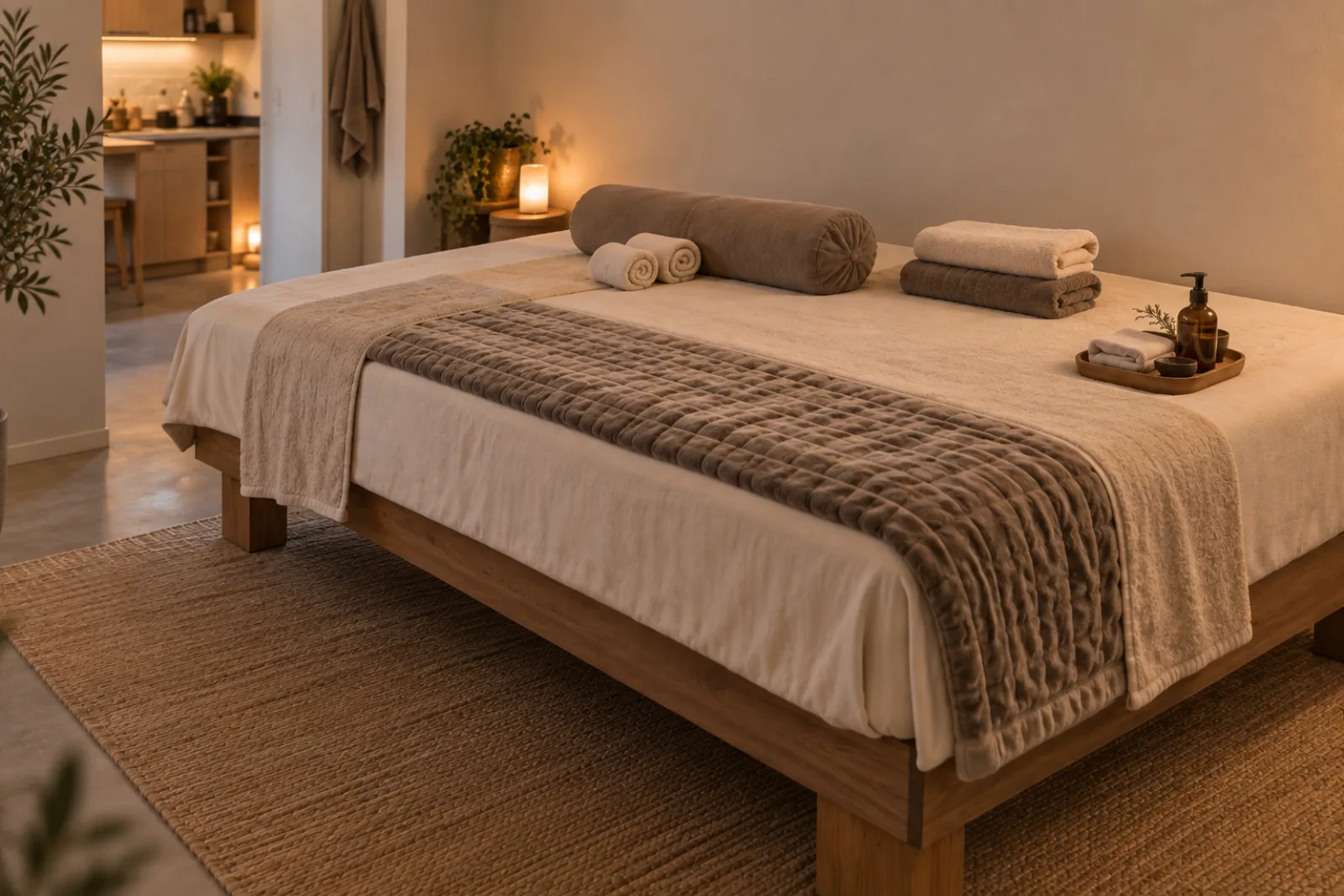
A new piercing should stay clear of direct pressure, rubbing and snagging during massage, including contact with the headrest, bedding and coverings. Do not remove jewellery simply to make a position possible. I’m Mei, an independent female massage therapist in Dubai; describe the piercing’s location and aftercare before booking, and postpone if a comfortable session cannot keep it undisturbed.
Do you have to remove piercing jewellery for massage?
Do not treat a new piercing like a loose necklace that can simply be taken off for an hour. Keep following your piercer’s instructions and discuss any jewellery change with them. My practical concern is whether the jewellery and surrounding skin can remain undisturbed in the position needed for your massage.
The Association of Professional Piercers’ aftercare guidance explains that a piercing may look settled externally while the tissue inside is still fragile. It also warns that piercing openings can shrink or close quickly, with wide individual variation. A comfortable-looking surface is therefore not a reason to remove jewellery for my convenience.
I do not change, loosen or reposition piercing jewellery. If you have been told to keep it in place, we should organise the massage around that instruction or choose a later date. Covering an awkward piece does not necessarily prevent pressure through it, and taping it down is not a substitute for appropriate aftercare advice.
A useful first message is: “I have a recent cartilage piercing in my left ear, and I must avoid pressure on it.” That identifies the issue without asking you to give a complete jewellery history. If there are several piercings, mention the ones that affect lying down, turning, clothing or the areas you want massaged.
For an established piercing, removal may be your usual preference, but you should manage that yourself according to advice you already trust. Do not force a piece that resists moving. Jewellery that is painful or difficult to remove deserves attention from the appropriate professional before it becomes part of a massage discussion.
Which positions could put pressure on the piercing?
Check all the surfaces and movements involved, not just the area being massaged. An ear piercing may matter during back work because of head support; a body piercing may matter even when its surrounding skin remains covered. The useful question is “What will touch this?” rather than “Will you massage this?”
| Piercing location | Contact to think about | What to describe before booking |
|---|---|---|
| Ear or ear cartilage | Side of the head against support, hair moving across jewellery | Which side is sensitive and which resting positions you already tolerate |
| Nose, eyebrow or another facial site | Headrest edges, face contact and turning the head | Where pressure must be avoided, including contact through a towel |
| Navel | Front-lying pressure, waistband and fabric movement | Whether lying on your front is currently comfortable and allowed |
| Another covered body area | Weight against the bed, covering or clothing | The contact restriction; detailed personal descriptions are unnecessary |
These are questions for planning, not suggested positions to try on a sore piercing. If every workable position puts pressure on it, postponing is the clear choice. You should not spend a relaxation appointment holding your head off the support or twisting your body to protect one small area.
For home visits, I use a massage blanket on your own bed with fresh linens, a headrest and a bolster. My studio has a large bed for clients. Read the usual massage setup and tell me what part might conflict with your aftercare; I do not promise specialist piercing supports or a particular pressure-free arrangement.
Think through the change between positions as well. Hair, a sleeve, a towel edge or bedding may catch jewellery while you turn, even if the final position feels fine. We can agree to pause before movement and keep the scope simple, but a plan that relies on constant awkward adjustments may not be a worthwhile appointment.
Message me on WhatsApp with the location and contact restrictions. State which massage areas matter most to you. That gives us a way to judge whether a useful session remains after excluding the contact you need to avoid.
Does an older piercing need the same precautions?
An older, comfortable piercing may need only practical attention to jewellery and positioning, but age alone does not settle the decision. A recent change, stretch, snag or new soreness should be mentioned even if the original piercing is years old. Describe how it feels now rather than relying on the date it was first done.
You can ask to leave the area untouched as a preference, without having to justify it medically. A piercing does not create an obligation to remove jewellery or accept contact there. Proper draping and the agreed boundaries apply throughout a strictly professional appointment for both women and men.
If you normally sleep comfortably with the jewellery, that is useful background for planning; it does not prove that every massage position will feel the same. The angle of the head, the duration of contact and movement of the covering can differ. Tell me when an ordinary position presses in the wrong place, and we will stop rather than try to make you tolerate it.
The concern with a new tattoo is different: skin condition and direct friction matter, but there is no projecting jewellery to catch. If you have both, the tattoo and massage guide covers that separate part of the conversation. Do not let a plan for one conceal the restrictions for the other.
Before the appointment, identify the simplest acceptable scope. “Back and arms, no scalp work, no pressure on my right ear” is more useful than “anything is fine if you are careful”. A clear scope lets you decide whether the proposed session matches what you hoped to receive.
When does a piercing need medical attention first?
Postpone massage and seek prompt medical advice if you suspect an infection. The NHS guidance on infected piercings highlights increasing pain, heat, swelling, marked colour change, discharge and feeling feverish or unwell. It advises leaving jewellery in unless a doctor tells you to remove it.
Do not ask me to decide whether discharge is normal or whether a lump needs treatment. A piercer can help with jewellery and routine aftercare questions; suspected infection belongs with a clinician. Massage oils and stronger pressure are not a response to a painful piercing.
When the problem is uncertainty about fit or a piece that keeps catching, resolve that with your piercer before booking. Changing the massage location from home to studio does not resolve jewellery that is already troublesome. The important change is a workable contact plan, not simply a different room.
If a piercing becomes uncomfortable during the session, say so immediately. We stop the contact and reassess whether continuing elsewhere is practical; there is no need to finish a body area first. New bleeding, significant pain or a suspected injury calls for appropriate care rather than another attempt at positioning.
Keep aftercare separate from massage preparation. Fresh linens support ordinary hygiene, but they do not make a vulnerable piercing ready for pressure. You should leave with the same jewellery instructions you arrived with unless your piercer or clinician has changed them.
What should your Dubai booking message include?
Send the piercing location, whether it is recent or newly irritated, the relevant aftercare restrictions and the areas you want massaged. Add your Dubai area, home or hotel preference, or request a studio appointment. A short written summary is enough to start; we can confirm practical details before choosing the duration.
Swedish and relaxation massage may suit a simple comfort-focused session when positioning works. Choosing gentler pressure does not remove jewellery contact from the headrest or bedding. Agree those details first, then choose the style for the areas that can comfortably receive massage.
Home and hotel visits are AED 400 per hour, and studio appointments are AED 300 per hour. Choose 60, 90 or 120 minutes at the same hourly rate, with no deposit; payment is cash or bank transfer on request. See the prices and session lengths once the scope is clear.
I work daily 10:00–23:00, by appointment. If the piercing needs more time, a later booking is preferable to spending the session guarding it. If it is already comfortable and the jewellery creates no contact problem, the discussion may be straightforward.
Send your piercing and positioning brief on WhatsApp, together with your preferred day. We can then decide whether the appointment you want fits your current aftercare without changing the jewellery or asking you to put up with discomfort.
Frequently asked questions
Can I get a back massage with a new ear piercing?
Possibly, but back work can still put your ear against the headrest or other support. Check the whole position and turning sequence against your piercer’s instructions, not only where the massage happens. Message me on WhatsApp with the piercing location and pressure restrictions; postpone if it cannot remain comfortably undisturbed.
Should I take out my new piercing for massage?
Do not remove new piercing jewellery just to fit a massage position. Follow your piercer’s instructions and let them advise on jewellery changes. I do not remove or adjust it during massage. Send the relevant contact restrictions on WhatsApp so we can decide whether the appointment is practical with the jewellery in place.
Can I lie face down with a navel piercing?
Do not use the massage appointment to test a position that presses on a recent or sore piercing. Ask your piercer about contact restrictions and describe the positions you already tolerate. Message me on WhatsApp before booking; if the usual setup cannot avoid unwanted pressure, a later appointment is the better choice.
What does a massage with Mei cost in Dubai?
Home and hotel massage costs AED 400 per hour; studio massage costs AED 300 per hour. Sessions last 60, 90 or 120 minutes at the same hourly rate. There is no deposit, with cash payment or bank transfer on request. We should confirm the piercing contact plan before choosing a session length.