By Mei Han, massage therapist in Dubai Updated 22 October 2026
Short answer
Ask your MS team about suitability, then plan around your usual energy, comfortable temperature and reliable pressure feedback. New symptoms or a suspected relapse need clinical advice before a massage appointment.
In Dubai and want hands-on help? Message Mei on WhatsApp · female therapist, AED 400/hr at home, no deposit.
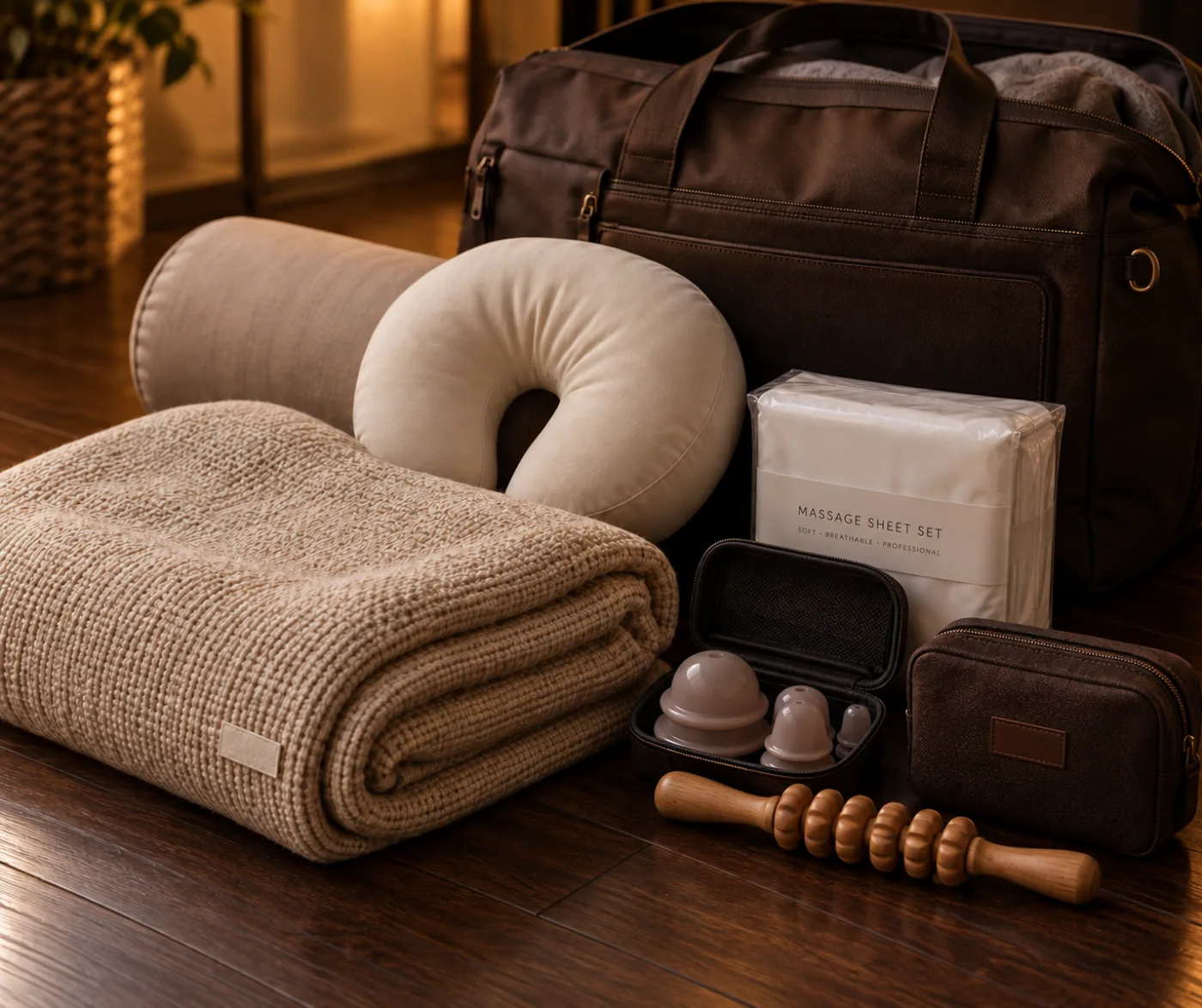
If you have multiple sclerosis, ask your MS team about massage suitability, then plan around temperature, sensation, energy and movement needs. Choose a familiar, comfortable setting and a modest relaxation goal rather than stronger pressure. New symptoms, a suspected relapse or illness should be assessed before booking; massage is not a treatment for the underlying condition.
What is a realistic reason to book massage with MS?
A reasonable goal is an enjoyable period of rest or gentle work on ordinary muscular tension, within your clinical advice. It is not to change the course of MS, restore lost sensation or replace rehabilitation. Being clear about that goal makes it easier to choose the areas, positions and duration that actually suit you.
I’m Mei, an independent female massage therapist in Dubai. I offer strictly professional massage for both women and men, by appointment, with proper draping. My appointments are ordinary massage visits; this page helps you decide whether that setting matches your needs before you commit to a time.
The MS Society’s massage information describes possible benefits suggested by small studies and recommends speaking to your GP or MS team. That is a reason to keep expectations modest. It does not establish that a particular technique or session length will help you personally.
Begin with a concrete request such as “I want comfortable shoulder work and a quiet rest, without stretching my legs.” This gives the appointment a useful boundary. “Work on all my MS symptoms” asks a massage visit to do something much broader than its role.
Swedish and relaxation massage is a sensible service to discuss for that limited goal. Do not select deep pressure simply because a limb feels stiff, or assume a muscular knot explains a change in movement. Your clinical team can help distinguish a relaxation preference from a symptom that needs a different response.
How should temperature and sensation shape the plan?
Use your own comfortable temperature as the starting point, not a standard idea of a warm spa room. Tell me whether warmth, cold or sudden changes bother you. The practical question is how to make the room and covering comfortable while keeping proper draping throughout the session.
The MS Society’s temperature guidance explains that heat can temporarily worsen symptoms for some people, while others find cold more difficult. It also warns against overlooking another cause of a change, such as infection. Your familiar response is useful information, but it should not be used to dismiss unfamiliar symptoms.
In Dubai, consider the journey as well as the room. If travelling through hot outdoor spaces commonly leaves you drained, a home appointment may remove that part of the day. If you choose the studio, allow yourself a comfortable arrival rather than stepping straight from a taxing journey into a long session.
Tell me if touch feels different in particular areas: unusually sharp, unpleasant, less clear or difficult to judge. The MS Society’s pain guidance distinguishes nerve-related pain from pain associated with muscles and posture. A light touch that hurts is a reason to change the contact plan, not proof that the area needs firmer work.
| What you notice | Useful information for the booking |
|---|---|
| Warm rooms make you feel worse | Your usual comfortable environment and covering preferences |
| An area feels numb or difficult to judge | Its location and any clinical advice about contact |
| Light touch feels painful | Areas to leave alone rather than repeatedly test |
| Turning changes comfort or balance | Positions you already tolerate and support you normally use |
Avoid treating absent discomfort as permission to increase pressure where sensation is reduced. Explain the uncertainty before the session, and obtain clinical advice when the area cannot provide reliable feedback. Leaving an area out can be a better plan than trying to establish its limit through massage.
How do you budget energy and arrange movement?
Plan the whole appointment day, including changing clothes, moving into position and getting up afterward. The hands-on minutes are only one part of the effort involved. Choose a time when those ordinary tasks tend to be manageable, and avoid making the session compete with a demanding outing.
A useful diary check has three parts: what comes before the massage, what you need during it and what is scheduled afterward. For example, a medical appointment followed immediately by a studio visit may leave less room for rest than a home session on a quieter day. This is a planning example, not a prescription for a particular MS routine.
Be specific about movement. “I can turn independently but need time” is different from “I need another person to help me transfer.” Tell me which applies and whether the usual assistance will be present. I cannot assume responsibility for lifting, specialist transfers or personal care as part of a massage booking.
My home setup uses your own bed with a massage blanket and fresh linens; the studio uses a large client bed. The appointment setup guide explains the normal arrangement. If your plan depends on specialist equipment or a different support surface, establish that need before booking rather than expecting it on arrival.
Send your temperature, movement and energy preferences on WhatsApp. Include whether you want fewer position changes and which areas are worth prioritising. A clear sequence can make the visit easier to follow without claiming that it will prevent fatigue.
Select the shortest standard duration that comfortably fits the agreed goal; do not choose the longest merely to get through a full-body list. If even that feels too demanding, postponing or choosing a different kind of support may be more appropriate. You can stop a session whenever you need to.
When should you postpone or change the plan?
Postpone when symptoms are new, substantially different from your usual pattern or suggest a relapse or infection. Contact your MS team or another appropriate clinician for advice. A relaxation appointment should follow that assessment rather than be used to test whether the change settles with massage.
Bring changes in skin condition into the decision too. An open sore, damaged skin or a painful contact point needs appropriate care and should not be covered over and massaged. Tell me about any area that must remain protected, even when it is not the area you hoped to have worked on.
For persistent or severe pain, new numbness or radiating pain, see your doctor or a physiotherapist. A known MS diagnosis does not establish the cause of every new symptom. Sudden serious neurological changes or severe breathing difficulty require urgent medical help, not a wait for a booking reply.
On the day, review the practical plan before starting: today’s energy, room comfort, permitted areas and how you will signal a pause. If the room feels wrong, address it before you lie down. If you are already too tired to communicate comfortably, keeping the original slot is less important than your comfort and safety.
During massage, useful feedback is concrete: “That light stroke hurts,” “I feel too warm,” or “Please stop while I change position.” There is no need to explain the mechanism. We can stop or leave an area out without treating the original plan as something you must complete.
Afterward, notice whether the appointment itself was manageable: getting up, dressing and returning to your ordinary routine. Keep any clinical symptom monitoring separate. A pleasant hour does not prove a change in MS, and a difficult day should prompt an honest review of whether this type of visit suits you.
What should your Dubai booking message contain?
Send your Dubai area, preferred day, relaxation goal and any relevant advice from your MS team. Add your temperature preferences, areas with altered sensation, comfortable positions and assistance needs. That is a practical brief, not a request for your full health history.
Decide who will communicate and who will help with logistics. A companion can assist if you want, but the massage choices remain yours. If you need someone for personal support, confirm their availability alongside the appointment rather than assume the therapist can cover that role.
Home and hotel visits cost AED 400 per hour, and studio appointments cost AED 300 per hour. The available lengths are 60, 90 and 120 minutes, with no deposit; payment is cash, with bank transfer on request. The full pricing page lists each duration, and appointments are available daily from 10:00–23:00 subject to confirmation.
My preference is a plan you can describe simply: the goal, the areas, the position and the conditions that would make you pause. Those details matter more than trying to name the strongest technique. A suitable appointment leaves room for your feedback throughout.
Message me on WhatsApp to check whether the normal setup fits. Once the clinical advice and practical needs are clear, we can agree the service and time without promising a medical outcome.
Frequently asked questions
Can massage help if I have multiple sclerosis?
Some people find massage useful for comfort or relaxation, but it does not treat the underlying condition or replace MS care. Ask your MS team about suitability, then choose a modest goal. Message me on WhatsApp about temperature, sensation, positioning and assistance needs before deciding whether an ordinary session fits.
Should I choose deep tissue massage for MS stiffness?
Do not assume that stronger pressure is the right response to stiffness or altered sensation. Ask your clinical team what contact and movement are appropriate, especially where feedback is unreliable. WhatsApp me with that advice and a clear relaxation goal; a gentle, limited session may be more appropriate than deep work.
Can I have a home massage if travelling makes my MS fatigue worse?
A home visit can remove the journey, but it still involves changing, lying down and getting up. Check that the normal bed setup and any required personal assistance are suitable. Send those details on WhatsApp before booking; a massage visit does not include specialist transfers, lifting or nursing care.
How much is a suitable relaxation massage in Dubai?
The standard rates are AED 400 per hour for home or hotel visits and AED 300 per hour at the studio. Sessions are 60, 90 or 120 minutes, with no deposit and cash payment or bank transfer on request. Choose a duration that fits your agreed goal and practical tolerance, after checking clinical suitability.