By Mei Han, massage therapist in Dubai Updated 4 October 2026
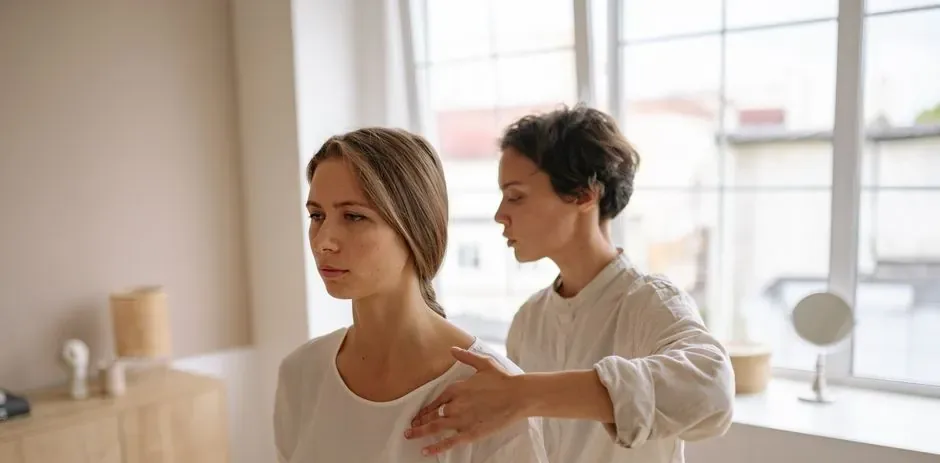
Book by WhatsApp text, explain your preferred way to communicate and agree how you will pause the massage before it starts. If you rely on seeing someone’s face, plan face-to-face check-ins instead of questions while you are looking away. A workable appointment needs clear consent and feedback in the position you will actually use, not just during the initial conversation.
I’m Mei, an independent female massage therapist in Dubai. This page is about arranging an ordinary massage when you have hearing loss. The purpose is relaxation or hands-on comfort; massage is not a treatment for hearing loss or a replacement for audiology care.
What should you put in the first WhatsApp message?
Start with how you prefer to communicate, then add the ordinary booking details. “Please reply in text; I understand best when I can see your face” is more useful than expecting the word “deaf” or “hearing loss” to explain everything. Different people use different combinations of hearing, speech, lipreading, signing and writing.
Include your area or hotel, preferred date, session length and main massage goal. Then name any arrangement you need for a comfortable appointment. You only need to share relevant information, not send your complete hearing history or a medical report to make an enquiry.
A useful written brief has four parts:
- Before arrival: text rather than a call, and how to let you know I have arrived.
- During conversation: whether face-to-face speech, writing or another method works for you.
- During massage: how you want to pause and how I should get your attention.
- Before confirmation: anything you need me to confirm I can accommodate.
I do not advertise sign-language interpretation or specialist hearing equipment. If either is essential, ask about the requirement before reserving time or travelling, so we can establish whether this appointment is suitable. Do not assume that a written booking alone supplies communication support throughout the session.
If someone helps organise the appointment, the preferences should still come from you. An organiser can coordinate a time or payment, but should not choose your pressure, contact areas or consent on your behalf. Make clear which details you would like discussed directly with you.
How can we make pressure checks and consent clear?
Agree and practise a pause signal before the massage begins, then check that it works while you are lying in the intended position. A raised hand may be useful for one person and awkward or hidden for another. The signal needs to be comfortable for you to make and straightforward for me to notice.
RNID’s communication advice recommends asking about individual needs, facing the person, reducing background noise and using written information when helpful. Applying those principles here means deciding how we will communicate when your face is turned away or your eyes are closed, rather than assuming the opening conversation solves everything.
| Point in the appointment | What to agree | A useful check |
|---|---|---|
| Before touch begins | Areas included, areas avoided and starting pressure | You can ask questions using your preferred method |
| While lying down | A clear pause signal | The signal is visible or otherwise reliably understood |
| Before changing position | How to explain the next step | You know what is being asked before moving |
| Before changing pressure or focus | How to get your attention and check comfort | Silence is not interpreted as agreement |
| At the end | How to indicate the session is ending | You can finish without being startled or rushed |
If we need a longer exchange, pause the massage and return to a position that makes communication easier. Trying to continue hands-on work while you struggle to understand a question does not save useful time. A short clear pause protects the comfort of the rest of the appointment.
If we cannot establish reliable consent and a way to stop, we should not start. That is a practical requirement for the session, not a judgement about your hearing. It is best resolved in the advance conversation rather than after you have already prepared for treatment.
What about hearing aids, lighting and background sound?
Tell me your preference about hearing devices before we settle the position. Do not assume you must remove them, and do not assume every position will be comfortable with them in place. Consider contact near the ear, any head support and whether you want that region left alone.
Follow your device’s care instructions and advice from your audiology team. If you choose to remove a device, decide where you will keep it and how we will communicate afterwards. Keep it somewhere you can find easily, away from oils and damp linens; do not leave it loose amongst the bedding.
The room also matters. If you use visual cues, bright enough light for conversation can be more useful than a dim spa atmosphere. Background music is optional, and a television or noisy conversation nearby can make an otherwise workable exchange harder. Say which environment helps you rather than accepting a standard idea of what relaxation should look like.
An app may be part of your usual communication method, but check whether it works well for you in that room. A phone placed out of reach or a screen you cannot see while lying down will not solve a mid-session question. Essential instructions need to be understood, not merely displayed somewhere.
Send me your communication preferences on WhatsApp, including what changes if you remove your hearing device. We can then confirm the practical arrangement before you choose the appointment time.
Which massage and setting should you choose?
Choose the service according to your goal, just as you would for any other appointment. Swedish and relaxation massage suits an enquiry centred on an unhurried break. If you want focused work for familiar muscular tension, describe the area and your preferred pressure rather than assuming hearing loss determines a treatment style.
A home visit may let you use lighting, a phone or other familiar arrangements that already work well for you. You need a quiet room and your bed; I bring the dedicated massage blanket, fresh linens and towels, headrest, bolster and oils. The studio uses a large bed made for clients, with the address shared when booking.
Read the home and studio setup guide and think through arrival as well as treatment. If you do not hear a doorbell, agree an arrival text. In a hotel, establish visitor access with reception and make clear how you want any arrival communication handled.
Sixty minutes can suit a clear, limited treatment plan. If you want a broader session, ninety or 120 minutes are available, but do not choose a longer paid appointment merely because you feel apologetic about communication. Explain what you need and agree both the scope and the timing before confirming.
The first appointment guide explains the usual process. Use it to identify anything you want clarified in writing, including draping, position changes and when questions will be asked. Familiarity with the sequence can leave fewer surprises on the day.
What should the final confirmation include?
Keep a written confirmation of the location, date, start time, duration, service and communication arrangements. Add the arrival method and any areas you want left untouched. That gives us one clear reference and avoids relying on a phone call you did not ask for.
Home and hotel visits cost AED 400 per hour, giving totals of AED 400/600/800 for 60/90/120 minutes. Studio rates are AED 300 per hour, or AED 300/450/600 for the same lengths. There is no deposit; payment is cash, with bank transfer on request. The pricing page gives the same options.
I welcome both women and men for strictly professional sessions with proper draping, daily 10:00–23:00 by appointment. You remain in control of contact and pressure throughout. An agreed plan can still change if a position or communication method turns out to be uncomfortable.
Message me on WhatsApp to agree the details. A good starting message says what you would like from the massage, how you prefer to communicate and what must work before you feel comfortable proceeding. We can then make a clear decision about the appointment together.
Frequently asked questions
Can I book a massage in Dubai without a phone call?
Yes. My booking channel is WhatsApp, so you can send your enquiry and preferences in writing. Include your area, preferred time, massage goal and how you want to communicate during the session. We should confirm that the practical arrangements work before you travel or prepare for a home visit.
Do I have to remove my hearing aids during massage?
Do not assume they must be removed. The decision depends on your preference, device guidance and comfort in the position you use. If you choose to remove them, agree another reliable way to communicate first. Message me on WhatsApp about device contact or areas you would like left alone.
How can I stop the massage if I cannot hear the therapist?
Agree and practise a pause signal before starting, and check that it works in the position you will use. Face-to-face or written check-ins can be arranged where practical. Send your communication needs on WhatsApp first; if we cannot establish reliable consent and feedback, we should not begin the session.
What are the home and studio massage prices in Dubai?
Home and hotel visits are AED 400 per hour, while studio appointments are AED 300 per hour, for 60, 90 or 120 minutes. There is no deposit, and payment is cash with bank transfer on request. Confirm the duration, location and communication arrangements together in the WhatsApp conversation before booking.