By Mei Han, massage therapist in Dubai Updated 3 October 2026
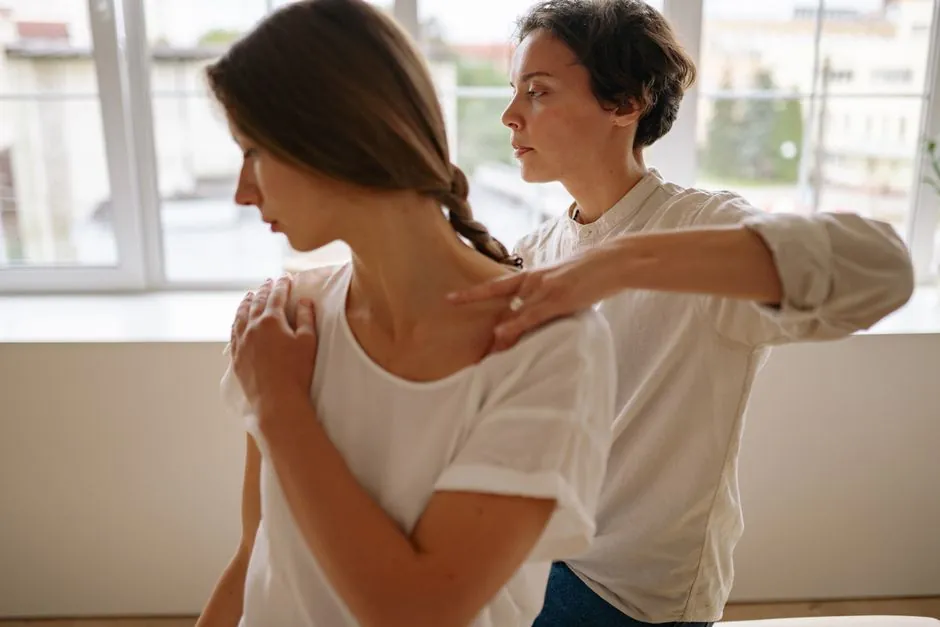
Tennis loads four places: the forearm that grips the racket and steadies the wrist at impact, the back of the serving shoulder, the trunk that rotates through every stroke, and the calves and hips that do the stopping and starting. A good tennis massage works all four in proportion. Book it two or three days after a match, and keep anything within 48 hours of the next one light.
I’m Mei, an independent female massage therapist in Dubai. Here’s what each of those areas goes through, what I do about it, how to time sessions around matches and the heat, and when a physio should see you first.
Where does tennis load the body?
Mostly on one side, and mostly through braking rather than hitting. Speed comes from your legs and trunk; the arm, shoulder and calves spend much of their effort controlling it and stopping it. That’s where tightness builds.
| Area | What loads it | What I work |
|---|---|---|
| Forearm and elbow | Grip, and holding the wrist steady at impact, especially on the backhand | Forearm muscles on both sides, not the sore tendon |
| Serving shoulder | Slowing the arm down after every serve and smash | Back of the shoulder, shoulder blade, lats, chest |
| Trunk and back | Rotation, and arching back into the serve | Obliques, mid and lower back |
| Calves, Achilles and hips | Split-steps, push-offs and wide lunges on hard courts | Calves, hamstrings, glutes, inner thighs |
Forearm and elbow: why does the grip take so much?
Because the forearm works on every single contact. The muscles on top of your forearm hold the wrist steady each time the ball meets the strings, and they share a tendon that anchors on the bony point on the outside of the elbow. Hundreds of impacts a session can irritate that tendon, which is what tennis elbow is: pain on the outside of the elbow from gripping and repeated wrist and forearm work. A one-handed backhand hit late, a grip that’s too small or very stiff strings all ask more of those muscles.
I don’t press on the sore tendon; it’s irritated enough already. I work the forearm muscles that pull on it, top and underside, then the upper arm and shoulder, because grip tension travels. The detail is in my tennis elbow guide. Between sessions, relaxing your grip between points and a few minutes of forearm self-care help more than you’d expect.
What happens to the serving shoulder and upper back?
The serve is a throw, and the back of the shoulder does the braking. Your legs and trunk generate the speed; the small muscles at the back of the shoulder, part of the rotator cuff, and the muscles around the shoulder blade then decelerate the arm after contact, on every serve and every smash. That’s why tennis players feel it at the back of the shoulder and along the shoulder blade rather than the front.
Over a season, the serving shoulder often loses some of its inward rotation. A quick check: reach up behind your back with each hand in turn. If the racket side stops noticeably lower, that’s the pattern, and it’s worth mentioning when we talk.
What I work: the back of the shoulder and around the shoulder blade; the lats, the broad muscles running from your upper arm to your lower back, which the serve loads hard; the chest and front of the shoulder, which pull the joint forward; and the mid-back, so your trunk can rotate freely again. Stubborn upper-back knots that have built over months suit slow deep tissue pressure.
Why do the calves, Achilles and hips take a beating?
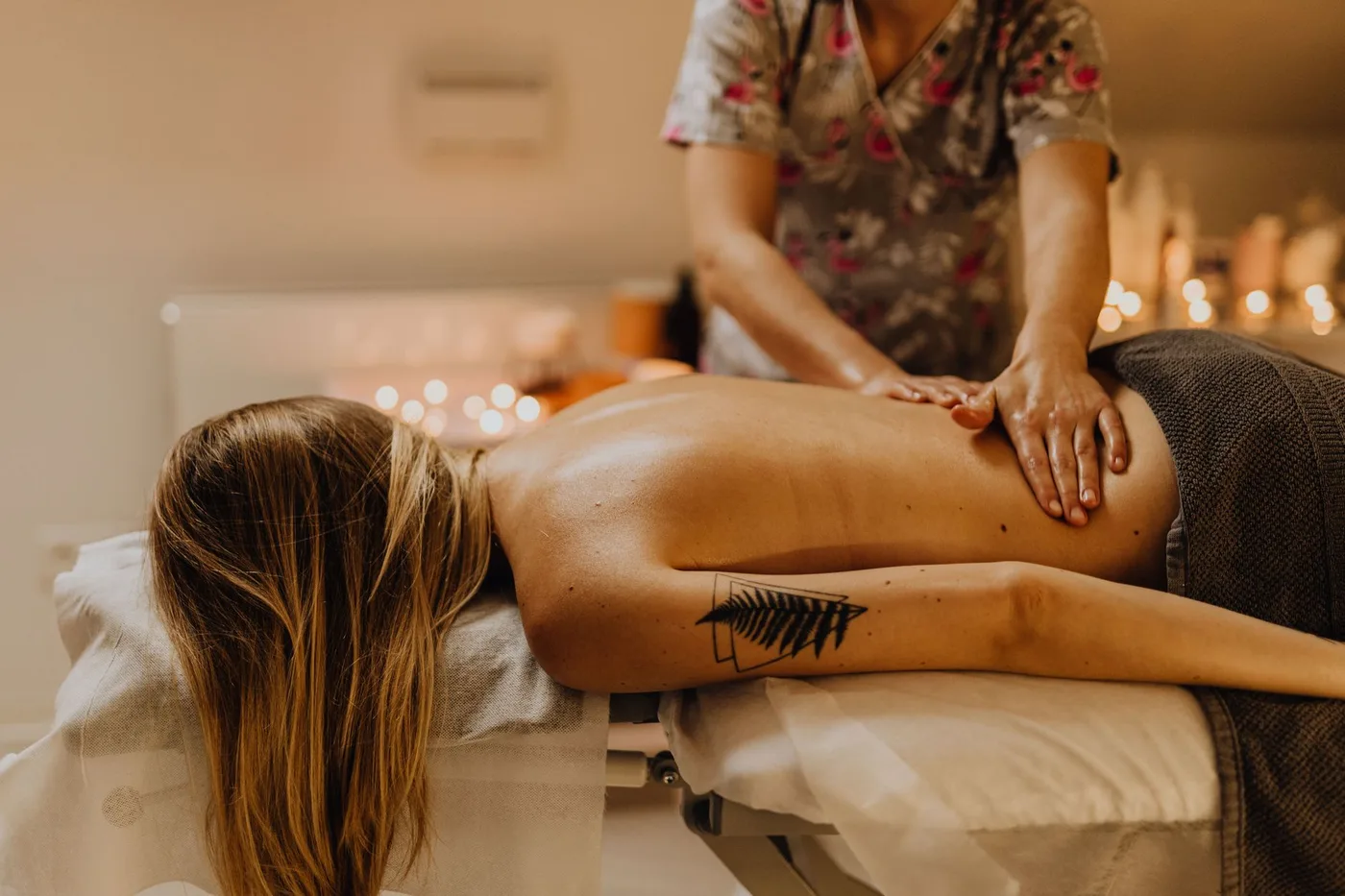
Because tennis is all stop and start. You split-step before every shot your opponent hits, push off, sprint a few metres, brake and recover. On hard courts the calves and Achilles absorb much of that, the glutes do the braking, and the inner thighs and hips take the wide lunges and open-stance forehands. The inner thigh is a classic place for a tennis strain.
I work the calves (the big muscle you can see and the deeper one beneath it), around the Achilles rather than on it, then the hamstrings, glutes, inner thighs and hip flexors. Sixty minutes means choosing a priority, usually arm and shoulder or legs. Ninety minutes covers the whole tennis body properly.
When should you book around matches?
Two or three days after a match, with at least two days before the next one, is the sweet spot for proper work. Closer to a match, the pressure comes down, because deep work in the 48 hours before can leave a muscle tender right when you need it sharp.
| Your situation | What I’d suggest |
|---|---|
| Match tomorrow | A light hour, or nothing. No deep work |
| You played tonight | Light work once you’ve cooled down, eaten and had a drink |
| 2–3 days after, next match 2+ days away | The proper session: firm, sports-focused work |
| Matches on consecutive days | Light only between rounds; the real session after |
| Playing three or more times a week | A session every two to three weeks through the season |
For maintenance, sports & recovery is the one to book: it’s planned around your calendar and covers arm, shoulder, trunk and legs in a single session.
How does Dubai heat change things?
It adds fluid loss and cramp to everything above. The cooler months, roughly October to April, are the comfortable time to play. In summer, play moves to early mornings and late evenings, and an 8pm match can still be above 30°C with heavy humidity. You sweat more, lose more salt and cramp more easily.
- Cramp isn’t a knot. If your calves cramped on court, rehydrate first. I’ll work them gently the next day rather than pressing hard that night.
- Dizzy, sick or headachy after playing? That’s heat, not muscle. Cool down, drink, and skip massage that day.
- Late matches suit home visits. I work until 11pm, so you can shower, lie down on your own bed and already be home when we finish. I don’t come to clubs or courts: it’s your home, your hotel or my studio.
When should you see a physio or doctor first?
When something is injured rather than overworked. Get these checked before booking massage for them:
- Elbow pain that hasn’t improved after two weeks of rest and self-care, a weakening grip, or tingling into the fingers (NHS advice on tennis elbow).
- Shoulder pain that came on suddenly or is severe, an arm you can’t lift, pain after a fall, pins and needles that don’t go away, or pain still getting worse after two weeks (NHS advice on shoulder pain).
- A sudden kick or pop at the back of the calf or ankle, especially if you can’t push up onto your toes. Get it checked urgently, as it can be an Achilles or calf tear.
- A knee that swells, locks or gives way.
- Back pain with numbness or tingling down a leg.
Massage helps an overworked tennis body recover. It can’t tell you what’s torn.
Booking a session around your matches
Home and hotel visits are AED 400 an hour, and my studio is AED 300 an hour, with no deposit (full pricing). Send me your next match, the areas that need work and where you are on WhatsApp, and I’ll suggest a slot that leaves you fresh for the next one.
Frequently asked questions
When should I get a massage before a tennis match?
Two or more days before is ideal for proper work. The day before a match, keep it light, an hour of flowing strokes to loosen up, or skip it. I don't do deep work within 48 hours of a match you care about, because it can leave a muscle tender right when you need it sharp. Message me your match time and I'll suggest a slot.
Can massage help a tennis player's sore shoulder?
For tightness from serving, yes. I work the back of the shoulder, around the shoulder blade, the lats and the chest, which can help ease the ache and let the arm move more freely. It doesn't replace rehab for an injured shoulder: night pain, weakness lifting the arm or pain after a fall needs a physio or doctor first.
Is it a good idea to get a massage after a tennis match?
Yes, once you've cooled down, eaten and had a drink. Keep it light on match night, covering legs, back and arm, and save deeper work for a day or two later. In Dubai's summer, rehydrate properly first, and skip it if you felt dizzy or sick on court. A home visit is AED 400 an hour, so there's no drive home afterwards.
What type of massage is best for tennis players?
Sports and recovery for regular maintenance, because it's planned around your matches and covers arm, shoulder, trunk and legs. Deep tissue suits a stubborn forearm or upper back that has built up over months. Light, Swedish-style pressure is right the day before a match. Sixty minutes covers one or two areas; 90 minutes covers the whole tennis body.
Do you come to tennis clubs in Dubai?
No. I don't work courtside or at clubs: I come to your home, hotel or serviced apartment, or you come to my studio. After an evening match that usually suits you better anyway. You shower, lie down on your own bed with my massage blanket over it, and you're already home when we finish.